
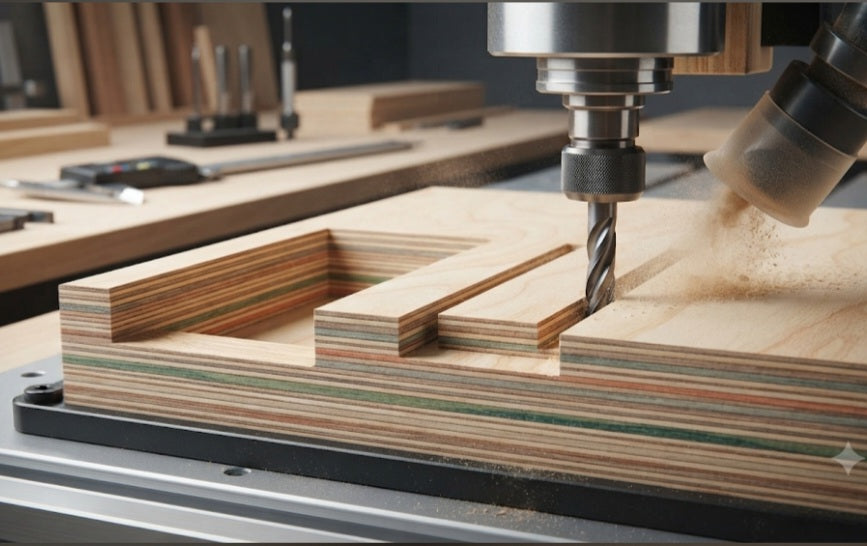
Understanding CNC Router Depth Per Pass: Optimizing Chip Loads and Structural Rigidity
Calculate Conservative Step-Down Ratios:
Base your initial depth of cut (DOC) on a fraction of the cutting tool's diameter—typically 50% for softwoods and plastics, and 10% to 20% for dense hardwoods or soft metals—to prevent excessive tool deflection.
Evaluate Spindle Rigidity and Motor Power:
Match your depth per pass to the torque capabilities of your desktop router spindle, ensuring the motor maintains consistent RPM without stalling or bogging down mid-cut.
Integrate Design for Manufacture (DfM) Protocols:
Structure your vector toolpaths to prioritize multiple shallow passes rather than a single aggressive cut, which minimizes harmonic vibration and protects both the workpiece and expensive carbide end mills.
Manage Effective Chip Evacuation:
Adjust your cutting depths and feed rates to ensure that chips are cleared efficiently from deep pockets, preventing re-cutting, friction buildup, and premature tool thermal degradation.
Refining Multi-Pass Parameters for Industrial Consistency
Balance Feed Rates with Step-Down Depths:
Fine-tune your linear feed speed alongside your vertical depth per pass to maintain a stable chipload, ensuring smooth surface finishes on structural components and custom workshop jigs.
Incorporate Automated Quality Control (QC) Checks:
Utilize digital Z-axis tool setters and automated probing routines to verify zero-point heights between multi-step operations, eliminating dimensional drift across high-volume production batches.
Mastering the mechanics of CNC router depth per pass is essential for transforming a basic workshop setup into a reliable, high-output manufacturing asset. When operators attempt to remove too much material in a single pass, the resulting lateral forces cause gantry flex, chatter, and micro-chipping on cutting edges. By breaking complex profile cuts and deep pockets down into calculated, incremental step-downs, you maintain strict dimensional tolerances while drastically reducing the risk of catastrophic tool failure during critical production runs.
Adopting a disciplined, multi-pass approach ultimately protects your workshop margins and ensures repeatable quality for corporate clients who demand absolute precision. When every component in a batch is milled under optimized parameters, the finished parts fit together seamlessly without requiring manual sanding or secondary cleanup. This operational reliability allows your business to scale efficiently, fulfilling demanding industrial procurement contracts with professional confidence and zero wasted raw materials.


