
Exploring the Sectors Powered by Digital Metrology
In today’s high-precision manufacturing, engineering, and design landscapes, staying competitive means embracing technologies that bridge the physical and digital worlds.
Traditional measurement tools—like calipers, height gauges, and manual coordinate measuring machines (CMMs)—have served industries well for decades, but they often struggle when faced with complex organic shapes, rapid turnaround demands, and intricate assemblies.
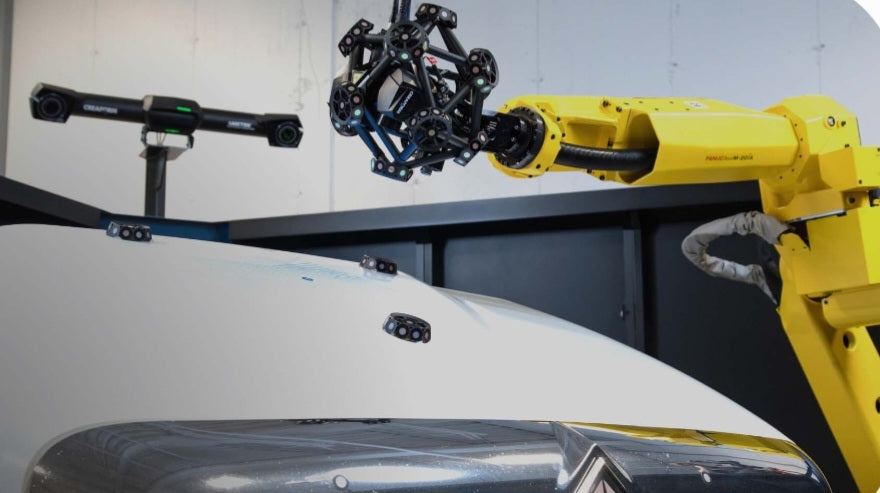
3D scanning is changing how modern businesses operate. By capturing millions of precise measurement points in a matter of seconds, this advanced technology generates a complete digital twin of any physical object. But which sectors are leading the charge in adopting this game-changing technology?
Key Industries Leveraging 3D Scanning
Automotive Engineering and Customisation
Vehicle manufacturing and performance tuning require exact tolerances, aerodynamic efficiency, and flawless custom fitments.
Application:
Automotive engineers use 3D scanners to reverse-engineer custom body panels, map complex engine bays, design bespoke exhaust routing, and perform rigorous quality control checks on stamped metal and molded plastic parts.
Aerospace and Defense
The aerospace industry demands absolute precision where tolerances are measured in microns and structural reliability is non-negotiable.
Application:
Aerospace contractors rely on metrology-grade scanners for First Article Inspection (FAI), monitoring structural health, performing non-destructive maintenance (MRO) on turbine blades, and validating complex airframe assemblies.
Fine Jewellery Design and Manufacturing
The jewellery industry thrives on exquisite detail, organic curves, and flawless symmetry across precious metals and gemstones.
Application:
High-end jewellers use micro-resolution 3D scanning to replicate vintage heirlooms, map complex gemstone settings, verify wax casting models, and securely archive custom masterpieces digitally.
Manufacturing and Industrial Design
Industrial manufacturing depends on rapid prototyping, iterative product development, and reliable defect detection.
Application:
Production teams use 3D scan data to generate color-coded deviation heatmaps comparing manufactured components directly against original CAD files, instantly catching warping, wear, or tolerance errors before parts hit the assembly line.
Healthcare and Medical Devices
Medical innovation requires precise anatomical matching for prosthetics, orthotics, and patient-specific surgical guides.
Application:
Clinicians and medical manufacturers use non-contact scanning to map body contours, design custom-fit orthotic devices, and ensure seamless integration for dental and skeletal implants.
Adopting 3D scanning technology is no longer just a luxury for specialized metrology labs—it is a vital competitive edge for modern workshops and engineering firms across the globe. By eliminating guesswork, accelerating design iterations, and guaranteeing uncompromising dimensional accuracy,
3D scanning empowers your team to work smarter, manufacture faster, and deliver superior results every single time.


