
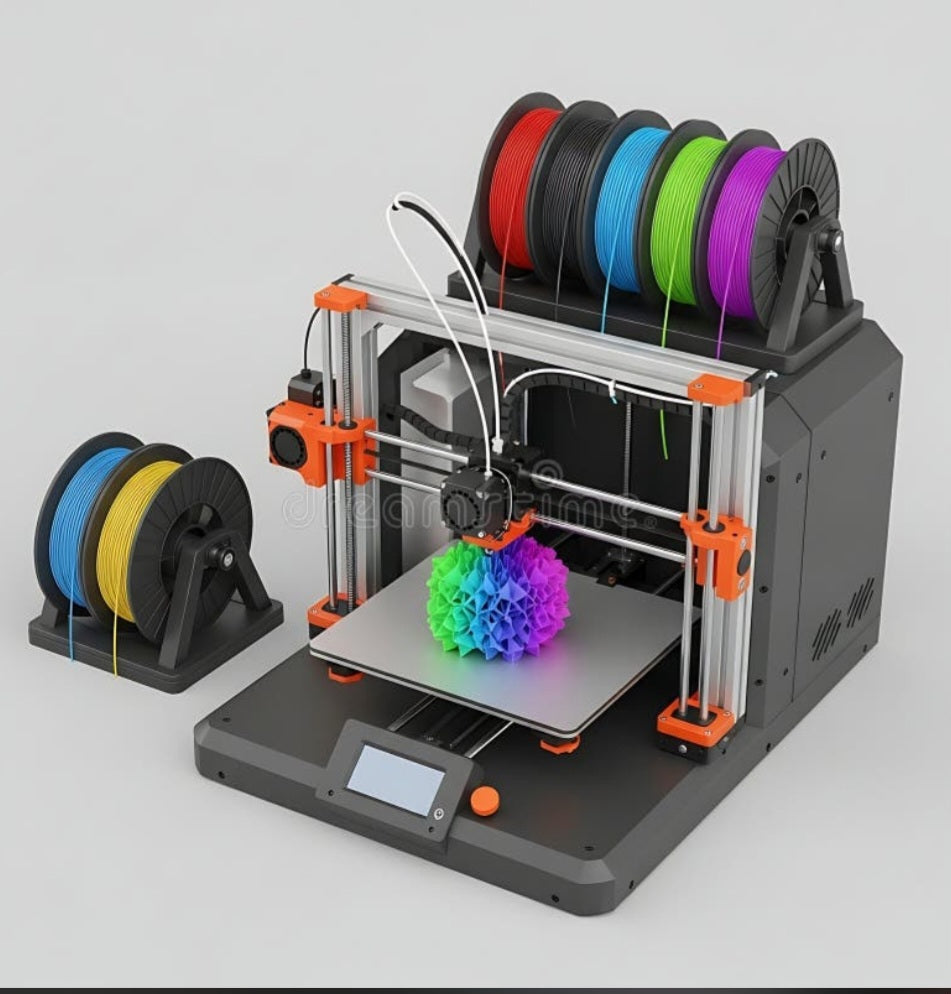
Keeping the Iron Working: How 3D Printing Your Own Machine Spare Parts Keeps Your Workshop Running Without Waiting for Shipping
Every maker, fabricator, and small-batch manufacturer knows the crushing weight of sudden equipment downtime. Whether you operate a CNC router, a laser cutter, a vinyl plotter, or even another 3D printer, complex mechanical devices rely on a vast web of proprietary linkages, motor mounts, belt tensioners, and custom enclosures. When one of these specialized internal components fails, the consequences are immediate: production halts entirely while you hunt for replacement spares from overseas distributors or wait weeks for backordered factory components to clear customs.
For decades, machinery maintenance meant complete dependency on industrial supply chains. If a manufacturer discontinued a model or went out of business, your expensive shop equipment was effectively reduced to scrap metal over a broken five-dollar plastic bracket.
Today, industrial and desktop additive manufacturing have transformed the modern workshop into an autonomous ecosystem. Printing your own machine spare parts on-demand changes the economic reality of hardware maintenance. Instead of stocking expensive redundant spare parts inventories or losing billable hours waiting for courier deliveries, you can diagnose a mechanical failure, pull up or rapidly model a digital replacement, and have a functional high-strength substitute printing on your build plate within the hour.
The Proactive Workshop Strategy for On-Demand Machine Spares
Transitioning your maintenance workflow from reactive waiting to proactive digital fabrication requires a shift in both material selection and workshop organization:
Building a Digital Spare Parts Archive:
Don't wait for a machine to break down before you design its replacement parts. During routine maintenance or cleaning sessions, take the time to measure and digitally model high-wear components like idler pulleys, cable chains, and motor brackets, storing them safely in a cloud CAD archive so they are ready to print instantly at 2:00 AM.
Upgrading Factory Weaknesses Through Redesign:
Factory-injected plastic parts are often engineered with minimum viable tolerances to cut production costs. When you recreate a machine spare in CAD, deliberately beef up weak zones by increasing wall thicknesses, adding structural gussets, or redesigning stress concentration points to make your printed replacement significantly stronger than the original OEM part.
Choosing Industrial-Grade Filaments for Heavy Service:
Standard decorative plastics have no place inside working machinery. Equip your maintenance printer with engineering-grade thermoplastics like high-temperature ABS, impact-modified Polycarbonate, or glass-fiber reinforced Nylon that can withstand continuous vibrational loads, thermal exposure, and mechanical friction.
Maintaining Critical Dimensional Tolerances:
Machine parts demand absolute precision. Calibrate your printer's dimensional accuracy regularly, account for material shrinkage rates in your slicer settings, and ensure that bearing fits and shaft holes maintain tight press-fit or slip-fit clearances to prevent mechanical slop during operation.
The Shift Toward Industrial Self-Reliance
Mastering the on-demand fabrication of machinery spare parts fundamentally changes how we interact with our tools, turning unexpected mechanical breakdowns from crippling bottlenecks into minor, easily manageable workshop tasks that keep your projects moving forward.


