
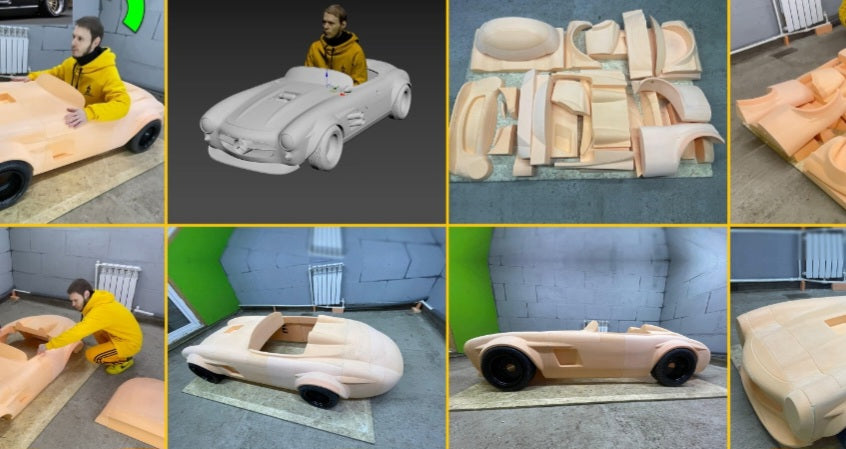
Classic Car Part Reproduction: Recreating History with Modern Manufacturing
The challenge of keeping classic cars on the road often comes down to a single issue: the lack of available parts.
When original components are worn beyond repair or simply no longer exist, reproduction is the only way to preserve the vehicle’s authenticity.
By combining historical knowledge with modern manufacturing, we can recreate essential parts that perform as well as, or better than, the originals.
The Reproduction Workflow
Reproducing a classic part is a multi-stage process that prioritizes accuracy and material integrity:
Data Capture: We begin by 3D scanning the original part to capture its precise geometry and unique wear patterns.
Engineering Validation: Using CAD software, we reverse engineer the component to remove years of corrosion and damage, returning the part to its intended factory specifications.
Material Selection: We select modern, high-performance materials—such as aerospace-grade alloys or reinforced polymers—that are often stronger and more durable than the original mid-century materials.
Precision Manufacturing: The final digital file drives CNC machining or advanced 3D printing to create a finished component that meets or exceeds OEM quality standards.
Why Reproduction Matters
The goal of reproduction is to maintain the soul of the vehicle while removing the limitations of its age. Whether it is a decorative trim piece or a critical mechanical bracket, having the ability to reproduce parts on demand ensures that your restoration project is never stalled by a missing component. This approach honors the classic design while utilizing the best technology available today to ensure the vehicle remains reliable for years to come.
Quality Control and Testing
Once a reproduction part is manufactured, the process concludes with rigorous quality control to guarantee it meets the required safety and performance standards.
This stage involves comparing the new component against the digital CAD model and, where applicable, conducting physical stress tests to ensure it matches or exceeds the original OEM specifications.
By validating every piece before it is installed, we ensure that your vehicle not only looks historically accurate but also operates with the reliability of a modern machine.


