
3D Scanning for Manufacturing: Boosting Efficiency and Quality Control
In the modern manufacturing landscape, the ability to quickly and accurately measure complex parts is the difference between a prototype that works and a costly production delay.
3D scanning has moved beyond hobbyist tinkering and into the heart of industrial production lines, providing a fast, non-contact method to digitize physical objects with extreme precision.
Enhancing Quality Assurance
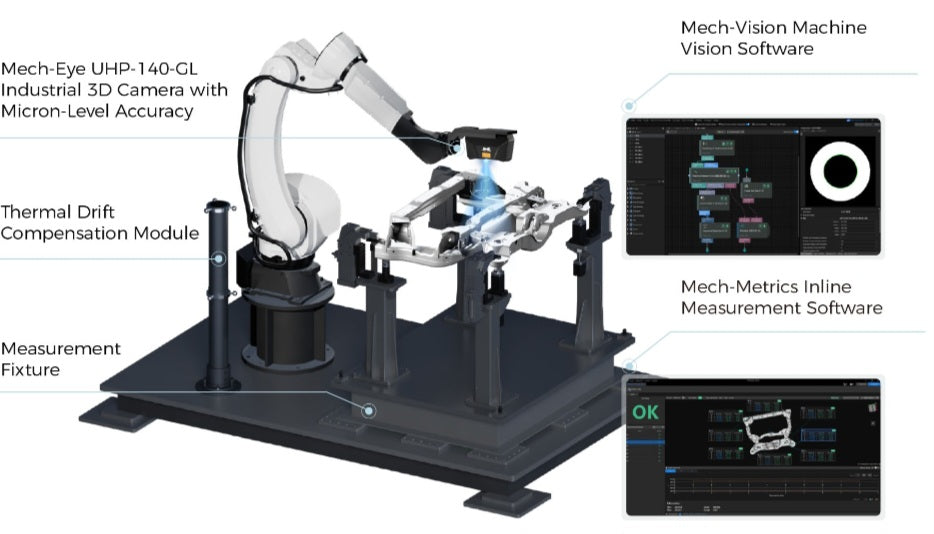
The most impactful application of 3D scanning in manufacturing is in inspection. Instead of relying on manual tools like calipers or gauges, which are slow and prone to human error, manufacturers use 3D scanners to compare a manufactured part against its original CAD model.
Deviation Analysis:
Software instantly generates a color-coded "heat map" showing exactly where the physical part deviates from the intended design.
Rapid Problem solving:
If a part fails, scanners identify the root cause—such as casting warpage or machining inaccuracies—in minutes rather than hours.
Streamlining Production Workflows
3D scanning creates a digital feedback loop that optimizes the entire production process. By scanning the first production run, manufacturers can immediately verify that assembly fixtures and CNC machines are calibrated correctly.
This "first article inspection" significantly reduces scrap rates and helps manufacturers achieve consistent quality across hundreds or thousands of identical units.
Bridging Physical and Digital
Beyond inspection, 3D scanning is essential for integrating legacy parts into modern manufacturing environments.
When a factory needs to replace a machine component that lacks digital blueprints, scanning enables the creation of a perfect CAD replica. This digital asset can then be optimized for new materials or faster manufacturing techniques, ensuring that production lines remain operational even when original equipment is discontinued.
The Value of Precision
By digitizing the physical environment, manufacturers gain a higher level of control. Whether it is ensuring a precision fit between two metal components or verifying that a custom automotive part meets strict tolerances, 3D scanning provides the high-fidelity data required to maintain excellence in every unit produced.
Optimizing Tooling and Fixtures
3D scanning also serves a critical role in the maintenance and design of the manufacturing infrastructure itself, particularly regarding tooling and assembly fixtures.
By scanning jigs and fixtures during their lifecycle, engineers can monitor for wear or structural deformation that might cause mounting errors on the assembly line.
Furthermore, scanning allows for the design of bespoke fixtures that perfectly conform to the complex geometry of a new part, ensuring stability and accuracy during the manufacturing process. This proactive approach to managing production equipment reduces downtime and ensures that even the most complex components are manufactured with perfect repeatability and precision.


