
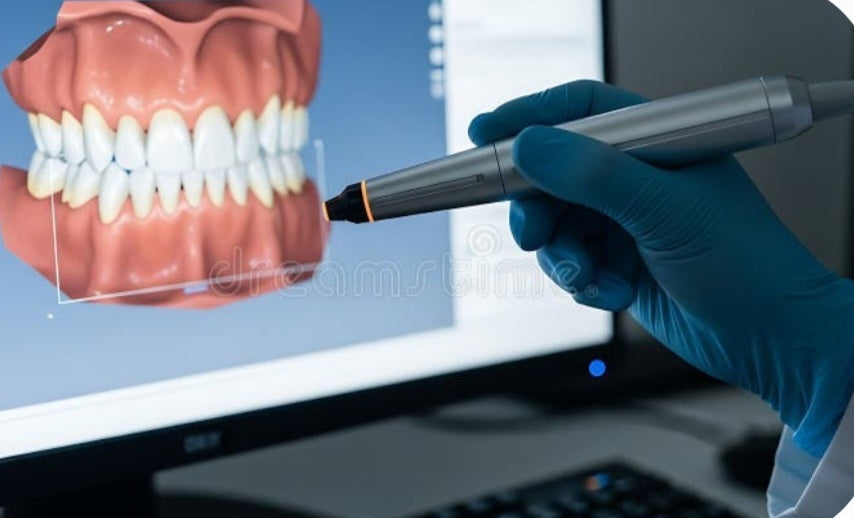
The New Standard: Transforming Smiles with Dental 3D Scanning
The field of dentistry has seen a massive shift toward digitalization, and at the forefront of this revolution is dental 3D scanning.
For anyone who has endured the traditional, sometimes gag-inducing experience of dental impression putty, the transition to high-speed digital intraoral scanning is a welcome change.
This technology is not just about convenience; it is about achieving a level of clinical precision that significantly enhances how we plan, design, and manufacture restorative dental work.
From Physical Impressions to Digital Precision
In the past, creating a crown, bridge, or set of aligners required a physical tray filled with impression material, which was messy, slow, and prone to distortions.
A Truly Comfortable Experience:
Intraoral scanners use advanced light-projection technology to capture the mouth in high-resolution 3D, entirely without contact. This process is clean, fast, and entirely non-invasive, making it a much more pleasant experience for the patient.
Sub-Millimeter Accuracy:
Digital scans provide a level of detail that traditional materials simply cannot match. By capturing every contour of a tooth with sub-millimeter accuracy, dentists ensure that final restorations—like crowns or veneers—fit perfectly, reducing the need for adjustments and ensuring long-term durability.
Instant Visualization:
One of the most powerful aspects of this technology is the ability to show the patient their own teeth in 3D on a screen in real-time. This visual transparency builds immense trust, allowing the patient to see exactly what the dentist sees and better understand the necessity and benefits of their treatment plan.
The Backbone of Digital Dentistry
Once the digital file (typically a file format like an STL or OBJ) is captured, it becomes the foundation for a wide range of sophisticated dental procedures:
Efficient Lab Workflows:
Digital scans can be sent to a lab or an in-office milling machine instantly via the cloud. This eliminates the days spent waiting for shipping physical impressions, allowing for faster turnaround times and, in some cases, same-day restorations.
Perfected Orthodontics:
Whether it is clear aligners or complex braces, 3D scanning allows for precise, predictable treatment planning. Orthodontists can simulate how a patient’s teeth will move over time, creating custom appliances that are tailored to the patient’s specific anatomy and long-term oral health goals.
Data-Driven Consistency
Because every scan is saved as a digital file, dentists have a precise historical record of a patient's oral anatomy. This allows them to monitor even the smallest changes in tooth position or gum health over months or years, facilitating proactive and preventive care.
A Brighter, More Comfortable Future
Dental 3D scanning is proving that the intersection of technology and patient-centered care leads to superior health outcomes.
By providing a faster, more comfortable experience and delivering precision-engineered results, this technology is truly changing how we approach dental health.
It is an inspiring example of how digital innovation can make specialized procedures feel less like a clinical chore and more like a high-tech, personalized journey toward a healthier smile.


