
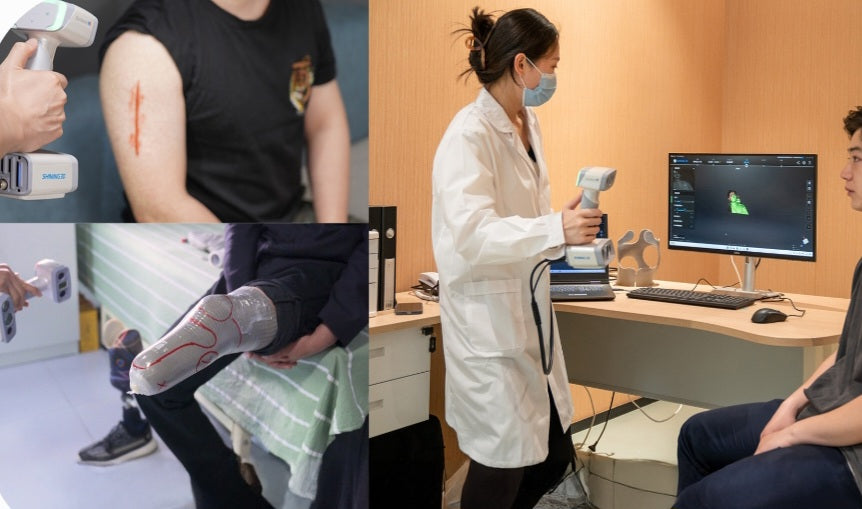
Restoring Independence: The Role of 3D Scanning in Modern Prosthetics
Prosthetic design is arguably one of the most impactful applications of 3D scanning technology.
By bridging the gap between human anatomy and engineering, 3D scanning provides the precision required to create prosthetics that don't just "fit," but actively restore a user's quality of life.
Moving away from traditional, labor-intensive molding techniques, we are entering an era of digital, compassionate, and highly personalized care.
The Advantages of Digital Anatomical Capture
The process of fitting a prosthetic is deeply personal and often involves sensitive tissue or delicate residual limbs. 3D scanning transforms this into a respectful and efficient experience.
Minimized Patient Fatigue:
Instead of requiring a patient to hold a static, often uncomfortable position for a long duration while plaster sets, a modern 3D scanner can capture the exact geometry of a residual limb in a matter of seconds. This speed is vital for patients experiencing pain or those with limited mobility.
The Power of Non-Contact Data:
Because light-based scanners do not apply any pressure to the tissue, they record the anatomy in its natural, relaxed state. This ensures that the resulting digital model is an accurate "as-is" representation, which significantly reduces the need for trial-and-error adjustments later on.
Volumetric Accuracy:
Prosthetic comfort is often determined by the volume and contour of the residual limb, which can change due to swelling or muscle atrophy. 3D scanning allows for highly accurate volumetric measurements, ensuring that the prosthetic socket provides a snug, secure fit that prevents slippage and skin irritation.
Designing for Daily Performance
Once the digital scan is captured, the data becomes an intelligent roadmap for the design process:
Optimized Load Distribution
Using software, designers can map out high-pressure areas on the residual limb and create "relief zones" within the prosthetic socket.
This level of customization ensures weight is distributed across the most resilient parts of the anatomy, maximizing comfort during extended use.
Rapid Iteration and Updates:
As a user’s anatomy adapts to their prosthetic, adjustments can be made to the digital file in minutes. This agility allows for the creation of new, updated sockets that grow or change alongside the patient, ensuring they always have the best support for their daily activities.
Integrated Aesthetics:
Beyond functional performance, digital design allows for the customization of the prosthetic’s outer profile. Whether it is matching skin tone or creating a unique, personalized design, 3D scanning gives users the power to make their prosthetic a true reflection of their identity.
Empowering a Higher Standard of Care
At its core, prosthetics 3D scanning is about more than just technology—it is about restoring the freedom of movement with dignity.
By combining clinical precision with a patient-first digital workflow, we are making high-quality, comfortable prosthetic solutions more accessible and effective than ever before. It is a beautiful example of how engineering can directly contribute to a more inclusive and mobile world.


