
Under the Hood: Choosing the Best 3D Printing Filament for Your Car Parts
Whether you’re modding your daily driver or restoring a classic, 3D printing is a game-changer for custom car parts. But when you move from printing desk trinkets to automotive components, the rules of the game change. Your parts aren't just sitting on a shelf—they're facing extreme heat, vibrations, UV radiation, and exposure to oils and fuels.
If you use the wrong material, you’re looking at a part that warps on a hot day or snaps under the stress of the road. To keep your project running smooth, you need to match your filament to the environment.
The Go-To Filaments for Automotive Projects
Not all plastics are created equal. Here is how the top contenders stack up for automotive use:
- ASA: The King of Exterior Parts
Why it works: It was specifically designed to handle the elements, offering incredible UV resistance so it won’t fade, yellow, or become brittle in the sun.
Best for: Mirror housings, exterior trim, grilles, and body panels.
2. Nylon (PA) & Fiber-Reinforced Nylons: The Mechanical Workhorses
For parts that need to be tough, wear-resistant, and capable of handling mechanical stress, Nylon is the industry standard.
Why it works: It’s incredibly durable and handles friction well, making it perfect for moving parts. When you choose a carbon-fiber or glass-fiber reinforced nylon (PAHT-CF), you get added stiffness and heat resistance, making it suitable for high-stress areas like engine bays.
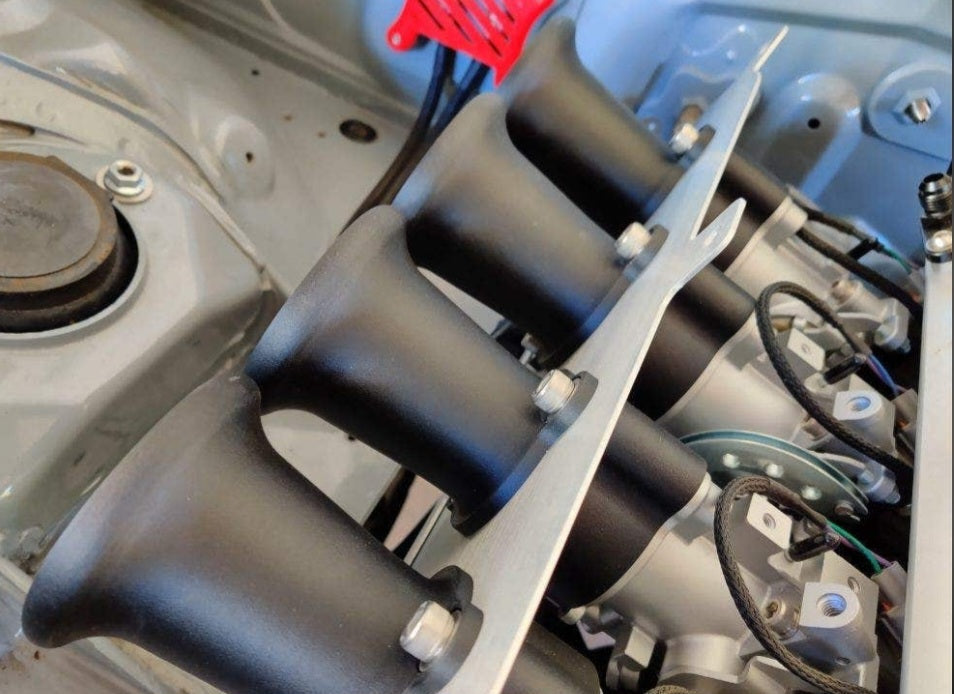
Best for: Gears, hinges, bushings, mounting brackets, and intake components.
3. ABS & ABS Composites: Toughness for the Interior
ABS has been a staple in automotive manufacturing for years.
Why it works: It handles higher temperatures better than standard plastics and is known for being tough enough to absorb impacts. For extra performance, ABS-CF or ABS-GF provides better dimensional stability and stiffness.
Best for: Dashboards, interior trim, housings, and protective covers.
4. TPU: For Seals and Dampeners
When you need something that needs to compress or absorb shock, TPU is the only real option.
Why it works: It’s a flexible, rubber-like material that resists abrasion and chemicals, making it ideal for parts that need to seal or vibrate without breaking.
Best for: Vibration dampers, gaskets, seals, and flexible grips.
5. PETG: The Versatile All-Rounder
If you’re just starting out or working on a non-critical part, PETG is a great, easy-to-print choice.
Why it works: It offers good chemical resistance to oils and cleaners and is far more forgiving to print than high-temp engineering filaments.
Best for: General-purpose brackets, enclosures, and jigs.
Pro-Tips for Success
Mind the Moisture: If you're using Nylon, keep it dry! It acts like a sponge and will absorb moisture from the air, which can ruin your print quality.
Upgrade Your Nozzle: If you decide to print with carbon-fiber or glass-fiber reinforced filaments, these materials are abrasive. You must use a hardened steel or ruby-tipped nozzle, or you'll wear through a standard brass nozzle in no time.
Ventilation is Key: Many of these high-performance materials (especially ABS and ASA) release fumes when printed. Always print in a well-ventilated area.
Choosing the right filament is the first step toward a part that doesn't just look good on your workbench, but actually holds up when you're out on the road.
So, don't be afraid to experiment, test your prints, and push the limits of what your machine can do. Happy printing, and we’ll see you out there on the road.


