
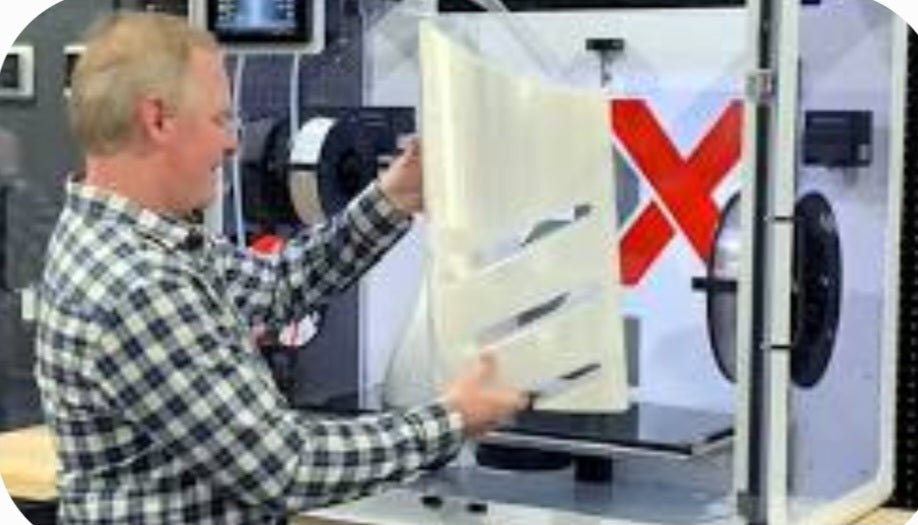
Determining which 3D printer has the "biggest" build volume depends on the technology used, as industrial-grade machines can be vastly larger than consumer-facing models.
Industrial-Scale Systems
For industrial applications, where size is a primary focus for casting and large-scale manufacturing, the build volumes can be massive:
voxeljet VX4000: This is one of the world's largest industrial 3D printing systems for sand molds and cores, featuring a build volume of 4,000 x 2,000 x 1,000 mm. It uses binder jetting technology rather than standard filament extrusion.
Large-Format FDM/FFF Printers
In the realm of FDM (fused deposition modeling) and FGF (fused granulate fabrication), several machines are designed for massive, single-piece prints:
Piocreat G12: This industrial pellet printer offers a build volume of 1,200 x 1,000 x 1,000 mm.
Modix Big-Meter: A popular option for businesses seeking a "true 1m" printer, providing a 1,000 x 1,000 x 1,000 mm build volume.
Mingda MD-1000D: Another industrial-grade FDM machine with a 1,000 x 1,000 x 1,000 mm capacity.
CreatBot D1000 Pro HS: Features a build volume of 1,050 x 1,050 x 1,050 mm (single extrusion).
3D Platform WorkCenter: Offers an expansive build area of 1,400 x 2,800 x 700 mm.
Large-Format Resin Printers
Resin printing generally has smaller build volumes due to the physics of curing photopolymers, but some industrial models are quite large:
Photocentric LC Titan: This industrial LCD resin printer features a build volume of 695 x 385 x 1,200 mm (totaling 321 liters).
Peopoly Phenom XXL V2: Often cited as one of the largest consumer/prosumer resin printers, with a build volume of 527 x 296 x 550 mm.
Consumer and Prosumer Large-Format Printers
If you are looking for large printers that are more accessible for workshops or advanced hobbyists:
Elegoo OrangeStorm Giga: A massive consumer-accessible FDM printer with an 800 x 800 x 1,000 mm build volume.
Ultimately, while the idea of owning a printer with a massive build volume is incredibly tempting for tackling large-scale projects, it is important to remember that such machines are a significant investment and require dedicated space and specialized maintenance.
For most of us in South Africa, unless you are running a high-volume manufacturing business, it is often more practical to stick with standard, reliable desktop printers and explore design techniques like modular printing—where you print larger objects in smaller, interlocking parts. This approach allows you to achieve impressive, large-scale results without the massive capital expenditure of industrial hardware, keeping your project costs manageable in Rands while you continue to refine your printing skills.


