
Precision at the Foundation of Production
In the world of high-volume manufacturing, the quality of your final product is only as good as the mould used to create it.
Whether you are dealing with injection moulding, casting, or composite layups, the mould is the master reference.
3D scanning has become a game-changer for mould makers, enabling levels of precision and efficiency that traditional measurement methods simply cannot match.
Perfecting the Master Pattern
Before a production-grade mould is cut, a master pattern is often created. If this pattern has even a slight imperfection, it will be reproduced in every single part that comes out of the mould.
Geometric Validation:
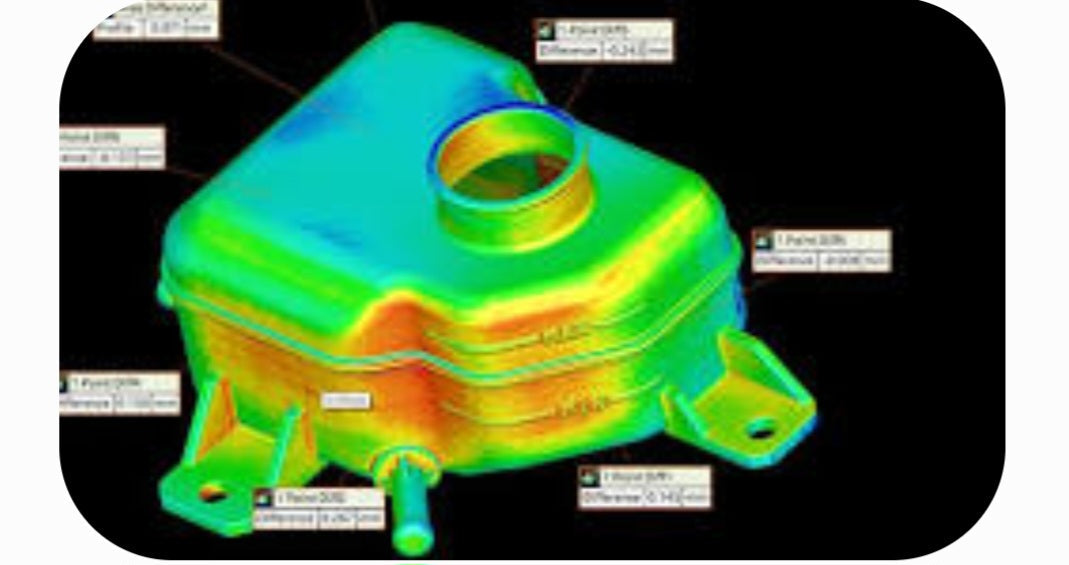
By scanning the master pattern, toolmakers can instantly verify that every curve, draft angle, and dimension matches the engineering CAD model.
Error Correction:
If any deviations are found, the scan data provides the exact coordinates needed to correct the pattern before the expensive moulding process begins, preventing costly mistakes in the finished tool.
Optimizing Shrinkage and Warpage
Materials used in moulding (such as plastics or molten metals) often shrink or warp as they cool. This is a notorious challenge for mould designers.
Predictive Compensation:
Manufacturers use 3D scanning to measure parts produced in previous runs to understand exactly how the material behaves under specific conditions.
Design Adjustments:
This data allows engineers to "over-correct" the mould design—adjusting the mould’s geometry to compensate for material shrinkage—ensuring that the final cooled part arrives at the intended design dimensions every time.
Mould Maintenance and Repair
Over time, moulds suffer from wear, thermal fatigue, and physical damage. Keeping a mould in production requires constant vigilance.
Wear Analysis:
Regular 3D scans of the mould cavity allow toolmakers to track material loss or erosion over time, enabling proactive maintenance rather than reactive, emergency repairs.
Reverse Engineering Damaged Moulds:
If a mould is damaged or if documentation for an aging mould is lost, 3D scanning allows for the full reverse engineering of the cavity. This digital replica can then be used to machine a replacement or repair specific sections, significantly extending the life of your tooling assets.
Streamlining Assembly and Fitment
Moulds are often complex assemblies of multiple moving cores, inserts, and slides. Ensuring these components fit together with perfect alignment is critical for flash-free production.
Scanning the individual mould components during assembly allows toolmakers to identify interference points and verify clearances in 3D, ensuring that the mould operates smoothly and produces parts with clean, professional parting lines.


