
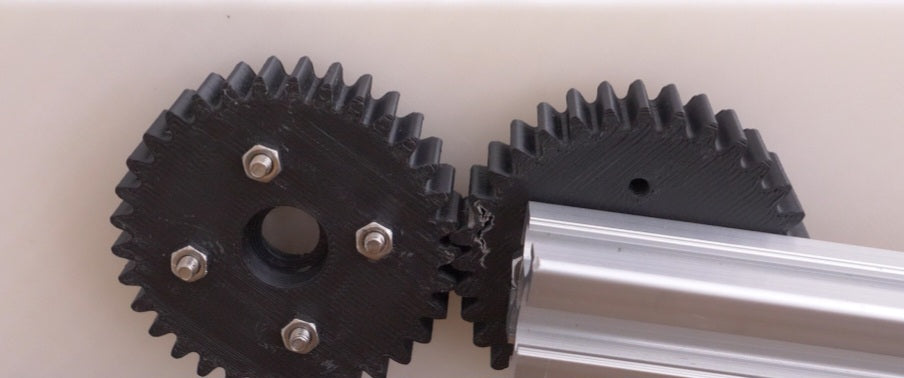
Mastering Additive Kinematics: Choosing the Best Filament for 3D Printed Mechanical Gears
Designing working gears using additive manufacturing demands far more than just picking a filament that looks good on the build plate. When your clients in Durban and across South Africa rely on 3D printed spur gears, helical gearboxes, or complex planetary drives, the material must endure continuous dynamic friction, cyclic shear stress, and constant mechanical meshing.Choosing an improper hobby plastic results in rapid tooth wear, thermal softening from operational friction, and catastrophic mechanical failure under load.
Top Engineering Filaments for High-Performance Mechanical Gears
Carbon Fiber-Reinforced Nylon (PA-CF):
The undisputed king of structural and moving parts. Polyamide naturally offers an exceptionally low coefficient of friction, meaning gear teeth glide smoothly against one another without binding. Adding chopped carbon fiber drastically increases stiffness, eliminating tooth flex under high torque transmission.
POM (Polyoxymetalate / Acetal):
Traditionally injection-molded for industrial gears, POM filament brings true engineering-grade lubricity and fatigue resistance to desktop and industrial 3D printers. It resists creep under sustained loads, though it requires specialized print bed adhesives to combat warping.
Polycarbonate-ABS Alloy (PC-ABS):
Combining the rugged impact resistance of polycarbonate with the smoother processability of ABS, this blend handles heavy shock loads and high-impact directional reversals typical in mechanical gearboxes.
Glass-Filled Polypropylene (PP-GF):
Boasting supreme chemical resistance and natural fatigue endurance, polypropylene handles repetitive flexing and cyclic loading brilliantly, making it a stellar choice for lightweight custom pulleys and industrial gear assemblies.
Key Tribological Metrics for Gear Design
Coefficient of Friction:
Measures how much resistance is generated when gear teeth slide past each other; lower values prevent excessive heat buildup and power loss.
Flexural Modulus:
Determines the stiffness of the gear teeth under load, ensuring that high torque transfer does not cause teeth to bend, slip, or snap off.
Wear Resistance:
Quantifies the material's ability to withstand abrasive surface degradation over thousands of continuous rotational cycles.
Balancing these tribological properties against material input costs in ZAR ensures your workshop delivers dependable, long-lasting mechanical components. By selecting polymers engineered for low surface friction and high fatigue endurance, you can successfully replace traditional metal gears with lightweight, self-lubricating custom prints.


