
Engineering Tight Tolerances: Choosing the Best 3D Printing Filament for Threaded Parts and Assemblies
Manufacturing functional threaded fasteners, screws, and threaded inserts using additive manufacturing introduces unique mechanical challenges. When your workshop builds custom assemblies where bolts, nuts, and threaded caps must lock together securely, standard brittle filaments will strip, shear, or deform under minimal tightening torque. Achieving high-shear threads that hold up to repeated assembly and disassembly requires engineering polymers with exceptional interlayer adhesion, dimensional stability, and low friction.
Top Engineering Filaments for High-Performance Threaded Components
Carbon Fiber-Reinforced PLA or PETG (CF-PLA / CF-PETG):
Excellent choices for rigid, non-binding threads. The inclusion of chopped carbon fiber dramatically increases the rigidity of the plastic walls, preventing the thread crests from crushing or flattening under heavy fastening pressure.
Polyoxymetalate (POM / Acetal):
A powerhouse for moving or threaded mechanical parts. POM provides a naturally slippery, low-friction surface that allows threaded bolts and nuts to spin together smoothly without galling or binding up mid-turn.
Polycarbonate (PC):
When maximum tensile strength and load-bearing capacity are non-negotiable, polycarbonate delivers rigid, industrial-grade threads that resist stripping even when torqued down firmly against metal components.
Glass-Filled Nylon (PA-GF):
Combining the tough, impact-absorbing qualities of polyamide with glass reinforcement yields threads that resist creep and maintain persistent clamping force over long operational lifespans.
Critical Mechanical Metrics for Thread Integrity
Tensile Strength:
Measures the maximum stress a threaded shaft or bolt can withstand while being pulled apart under tension before snapping.
Shear Resistance:
Determines how well individual thread teeth withstand the stripping forces generated when tightening a nut or bolt against high rotational torque.
Dimensional Shrinkage Rate:
Quantifies how much a polymer contracts as it cools from the nozzle temperature, dictating whether printed threads will match tight ISO or UTS design tolerances.
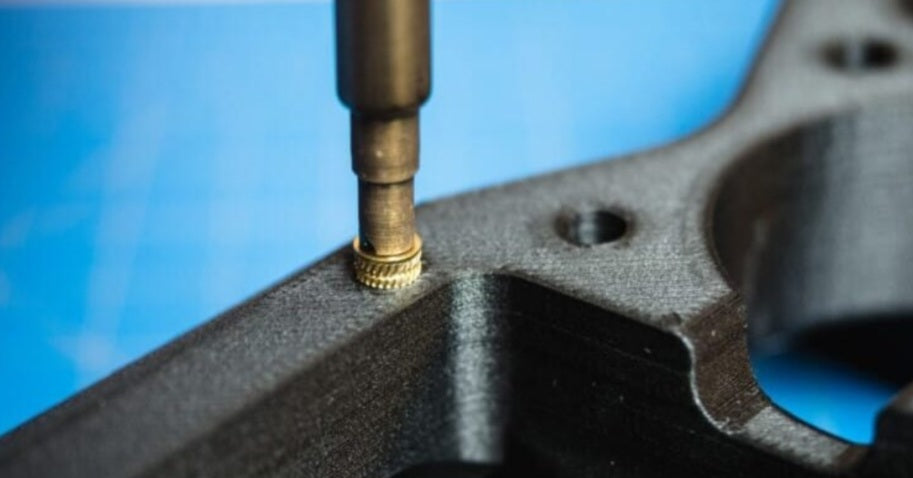
Balancing these mechanical properties against material input costs in ZAR ensures your workshop delivers dependable, precision-engineered threaded fasteners. By selecting polymers optimized for rigidity and low friction, you can produce custom nuts, bolts, and threaded housings that maintain reliable clamping strength under demanding operational loads. Integrating metal heat-set brass inserts alongside direct-printed plastic threads further expands your capability, allowing you to bridge the gap between rapid prototyping and permanent mechanical end-use production.


