
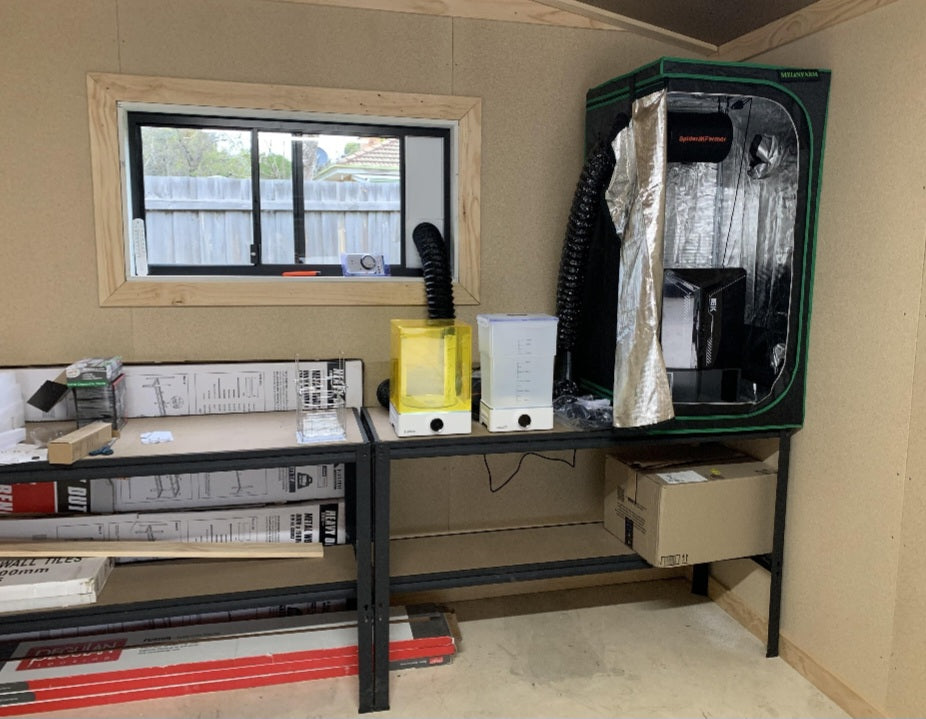
Transitioning from raw 3D printing to a streamlined post-processing workflow requires shifting focus from your printer hardware to post-processing stations. Handling liquid photopolymer resin involves sticky isopropyl alcohol baths, manual scrubbing, and separate UV curing steps that can quickly become messy if managed manually. Choosing the right wash-and-cure station for your home workshop streamlines this transition, eliminating hazardous splashes and ensuring your prints achieve optimal polymer cross-linking. Evaluating tank capacities, dual-function versatility, agitator speeds, and safety enclosures helps you select a machine that matches your production volume.
Evaluating Tank Capacity and Build Size:
Ensuring the wash container comfortably accommodates your printer's entire build plate—or individual large models—prevents the hassle of awkward manual submersions.
Dual-Function vs. Separate Units:
Choosing an all-in-one machine that seamlessly switches from a magnetic impeller wash bath to a rotating UV curing turntable saves valuable workbench space.
Adjustable Agitation Speeds:
Selecting a station with variable motor speeds protects delicate model details from being sheared off by violent vortex currents during the solvent bath.
Enclosed UV Shielding:
Prioritizing units with automatic safety cutoff switches when the UV cover is lifted protects your eyes from harmful ultraviolet radiation during the curing cycle.
Refining your station setup also involves optimizing solvent management and curing wavelengths to prevent surface tackiness. Many modern stations feature dual-band 395nm and 405nm UV LED arrays distributed evenly around a rotating platform, ensuring light hits deep recesses and overhangs without leaving sticky uncured patches. Additionally, utilizing a two-stage washing approach—a dirty initial bath to strip the bulk resin followed by a clean secondary rinse—extends the lifespan of your alcohol and guarantees a crystal-clear, matte finish on your prints.
Wavelength Efficiency:
Ensuring your curing light matches your resin's curing spectrum maximizes structural strength and eliminates surface tackiness.
Two-Stage Solvent Strategy:
Implementing a dirty and clean wash station setup prevents premature saturation of fresh isopropyl alcohol.
Turntable Stability:
Choosing a solar-powered or motorized rotating plate prevents uneven curing hotspots that can warp long, thin resin components.
Fume and Odor Management:
Locating your wash station in a well-ventilated area or utilizing sealed containers minimizes persistent alcohol and resin vapor buildup in closed rooms.
Investing in a reliable wash-and-cure station transforms a tedious, hazardous chore into a clean, repeatable automated process. By carefully comparing tank dimensions, variable agitation settings, and dual-band UV curing capabilities, you protect the structural integrity and surface finish of every print leaving your workshop. Integrating this essential piece of equipment into your daily maker routine guarantees professional-grade post-processing results with minimal effort.


