
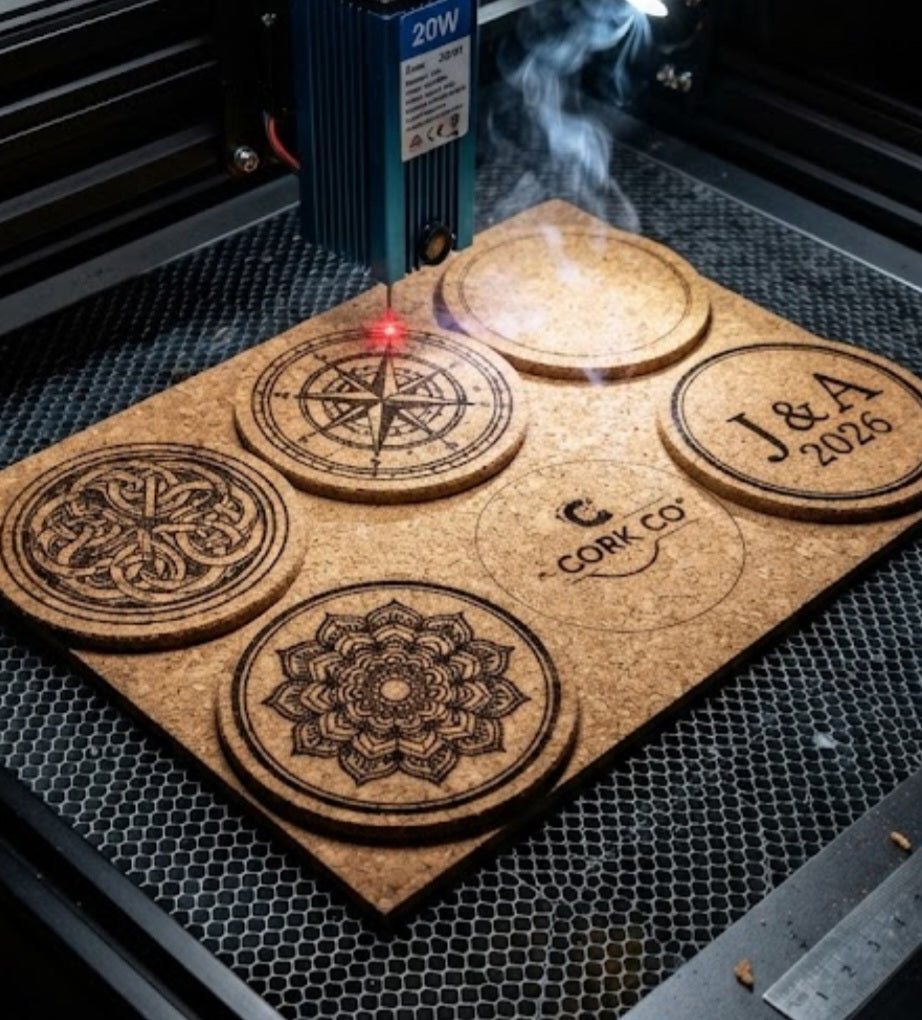
Expanding your product line with functional, eco-friendly home decor items is one of the smartest ways to boost your e-commerce sales. Cork coasters rank among the most popular and profitable items for small maker studios because raw cork sheets or blanks are inexpensive to source locally, lightweight to courier, and incredibly responsive to laser treatment. When a blue diode laser hits natural cork, it instantly vaporizes the localized binders and bark cells, producing a rich, high-contrast dark brown burn without needing messy marking sprays or chemical additives.
However, achieving professional, retail-ready results requires careful calibration. Because natural cork is composed of compressible bark tissue with varying densities and resin pockets, improper power settings can cause uneven scorching, edge chipping, or deep pitting. Let's break down the optimal test setup, material characteristics, and finishing techniques to ensure your cork coasters look pristine and hold up against everyday moisture.
Natural Contrast Generation:
Cork contains natural suberin that darkens rapidly under a 450nm laser beam, creating a striking, high-contrast graphic that requires zero post-processing paint fills.
Speed and Power Balance:
Diode lasers excel at surface engraving cork, but running too slow with excessive power can cause the laser to burn deep trenches that collect dust and crumbs.
Managing Flexibility and Warping:
Thin cork sheets can easily warp or curl if exposed to excessive humidity or localized heat during engraving, making proper bed flattening essential.
Moisture Protection:
Because cork is naturally water-resistant, adding a light, food-safe sealant or leaving it raw depends entirely on whether your customers plan to use them for hot coffee mugs or condensation-heavy cold drinks.
Step-by-Step Material and Finish Testing Protocol
To get the best possible contrast and structural durability on your cork coasters, follow this systematic testing and finishing workflow:
Surface Flattening and Securing:
Cork blanks can sometimes arrive with a slight bow from packaging. Place your coaster flat on the laser bed and secure it with low-profile magnetic pins or lightweight tape around the edges to ensure a uniform focal distance across the entire graphic.
Dialing in Software Parameters:
In your laser control software, run a small test matrix. For a typical 20W diode laser, a great starting baseline for natural cork is speed between 3,000 mm/min to 4,000 mm/min at 30% to 40% power. This low power density grazes the surface just enough to achieve a dark espresso-brown mark without gouging the material.
Optimizing Air Assist:
Keep your air assist pressure moderate—just enough to blow away fine cork dust and smoke particles, preventing them from settling into the micro-pores and graying out your clean background.
Post-Engrave Cleaning and Sealing:
Once engraving is complete, gently wipe the surface with a soft, dry microfiber cloth to remove loose carbon residue. If you want to protect against coffee spills and wine stains, apply a very thin coat of matte water-based polyurethane or mineral oil, wiping away any excess immediately so the unengraved cork retains its natural tan color.
Avoiding Over-Burning:
If your engraved lines look charred, sticky, or smell heavily of burnt rubber, reduce your power by 5% increments or bump up your travel speed.
Batch Production Tips:
When engraving a set of four or six coasters, group them in a single job layer to ensure uniform color depth and shading across the entire matching set.
The Verdict
Engraving cork coasters is a fantastic, high-margin addition to your maker catalog, offering rapid production times and stunning visual contrast with minimal hardware wear. By keeping your power low, your speeds fast, and your surface properly flattened, you can pump out custom sets that look exceptionally professional and delight your customers.
Mastering organic materials like cork proves that you don't need complex chemical treatments to create striking, durable retail items. By refining your speed and power parameters, you unlock clean, repeatable results that elevate your product offerings and keep production costs low.


