
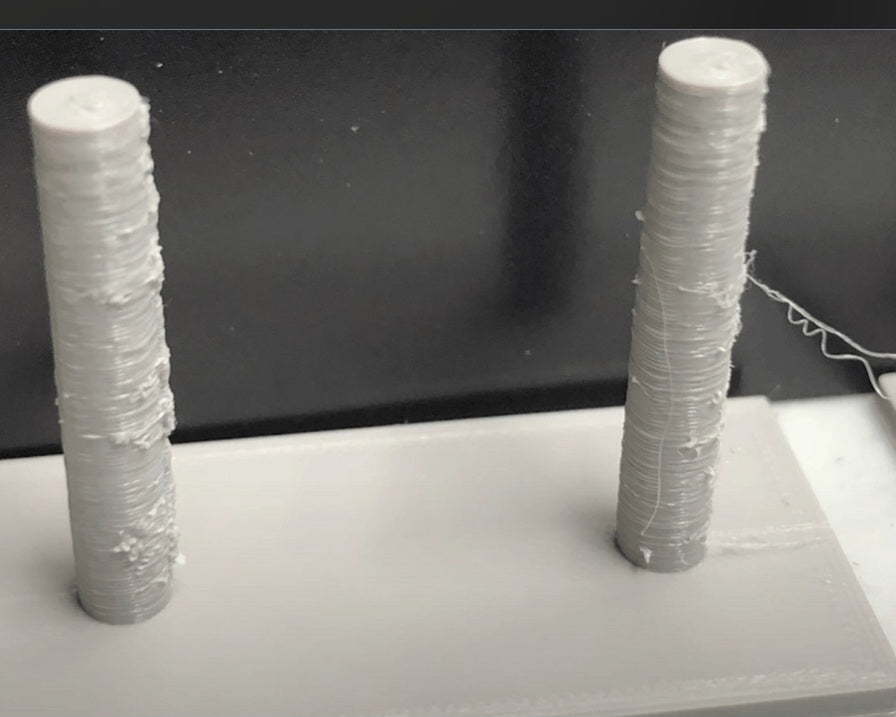
Knowing if your 3D printer filament is wet is one of the most useful skills for achieving consistent print quality. Since moisture turns into steam when it hits your hot nozzle, it essentially "boils" the plastic, leading to tell-tale signs in both the process and the final product.
The Most Common Signs Your Filament is Wet
Auditory Clues (The Popping Test): This is the most reliable sign. Listen closely as your printer extrudes plastic. If you hear popping, crackling, sizzling, or hissing sounds, that is moisture turning into steam inside your nozzle.
Visual Print Defects:
Stringing and Oozing: If you suddenly experience excessive "webs" or "hairs" between parts—especially if your retraction settings haven't changed—moisture is a common culprit.
Bubbles and Pinholes: Small craters, tiny bubbles, or a grainy/pitted surface finish are clear indicators of steam escaping during the print.
Rough/Matte Texture: Instead of a smooth, glossy finish, your prints might look dull, matte, or blotchy.
Inconsistent Extrusion: You may notice gaps, missing walls, or thin/thick sections because the steam is disrupting the steady flow of plastic.
Mechanical Weakness: Prints made with wet filament often suffer from poor layer adhesion. If your finished parts feel brittle, break easily along the layer lines, or delaminate (layers separating), the filament is likely damp.
Quick DIY Tests
The Bend Test: Take a segment of the filament and bend it into a "U" shape. Fresh, dry filament should flex and hold. If the filament snaps or shatters easily, it has likely become brittle from absorbing too much moisture.
The "Extrusion Dribble" Test: Manually extrude a few centimeters of plastic through your hotend. If the strand comes out looking messy, bubbly, or keeps "oozing" from the nozzle for a long time after the extruder stops, that is a strong sign of trapped moisture.
Which Filaments Are Most Prone?
Some materials absorb moisture much faster than others:
Highly Sensitive: Nylon (can get wet in hours), TPU, PVA, and PETG.
Moderately Sensitive: ABS and specialty copolymers.
Low Sensitivity: PLA, though it will still absorb moisture over long periods of time.
Pro-Tip
Spotting wet filament doesn't have to be a guessing game. By keeping an ear out for popping sounds during your print and checking your finished parts for surface defects or poor layer strength, you can quickly identify moisture issues before they ruin your project.
If you find that your material is acting up, don't panic—a little bit of patience and a good drying session can often bring your spool back to life. Keeping your printer running smoothly is all about knowing these small signs, so take the time to inspect your filament and you will consistently achieve the high-quality results you deserve.


