
How to Properly Store Your 3D Printer Filament
Storing your filament correctly is the cheapest, most effective way to improve your print quality and save money on wasted materials. If you’ve struggled with brittle plastic, clogs, or poor layer adhesion, your storage habits are likely the missing link.
The Golden Rule: Keep It Dry
As mentioned, most filaments are hygroscopic. Once they absorb moisture, the water turns to steam inside your hotend, causing internal bubbles, stringing, and a "popping" sound during printing.
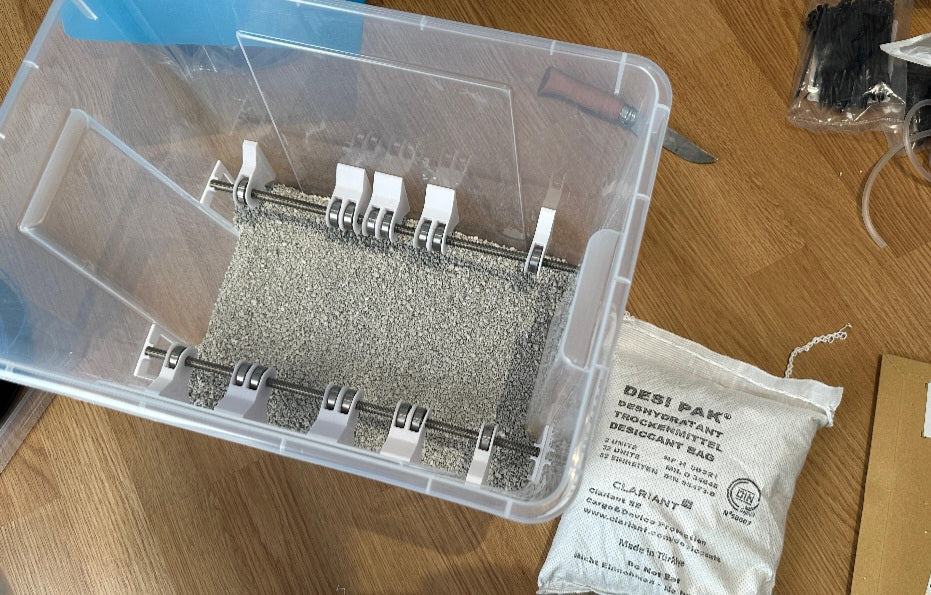
The Best Method: Use a sealed container (like a plastic bin with a rubber gasket) combined with plenty of desiccant packets (silica gel).
Pro Tip: Use a humidity indicator card inside your container. If the humidity rises above 30–40%, it’s time to replace or "recharge" your silica gel in the oven.
Vacuum Sealing for Long-Term Storage
If you have a large collection of filament, you don’t need to use all of it at once. For rolls you aren't planning to use for several weeks or months:
Vacuum Bags: Use vacuum-seal bags designed for filament. They squeeze out all the air, keeping your material factory-dry indefinitely.
Label Everything: It’s easy to forget what’s in a sealed bag. Use a permanent marker on the bag to note the brand, material type, and the date you opened it.
Avoid Sunlight and Extreme Temps
While moisture is the biggest enemy, UV light and heat can also degrade your filament.
UV Protection: Direct sunlight can make filament brittle and cause color fading over time. Store your containers in a cool, dark closet or drawer.
Temperature Stability: Avoid storing filament in garages or attics where temperatures fluctuate wildly between summer and winter. Consistent, room-temperature storage prevents the material from expanding and contracting repeatedly on the spool, which helps prevent tension-related snaps.
Managing Your "Active" Spool
Even while a spool is loaded on your printer, it remains exposed to the environment. If your printer is in a room with high humidity, your filament can still absorb moisture over the course of a long, multi-day print. If you live in a particularly humid climate, consider using a filament dry box or a simple spool cover. These devices feed the filament directly from a sealed, dry environment into your printer, ensuring the material stays crisp and dry throughout the entire printing process.
The "Dry Before Use" Mindset
If you suspect a roll has already absorbed too much moisture, don’t throw it away! Most filaments can be fully recovered by drying them. You can use a dedicated filament dryer, a food dehydrator (set to about 45°C for PLA), or even your printer’s heated bed with a cardboard box placed over the spool. By getting into the habit of drying your material before you see signs of degradation, you’ll spend less time troubleshooting failed prints and more time creating.


