
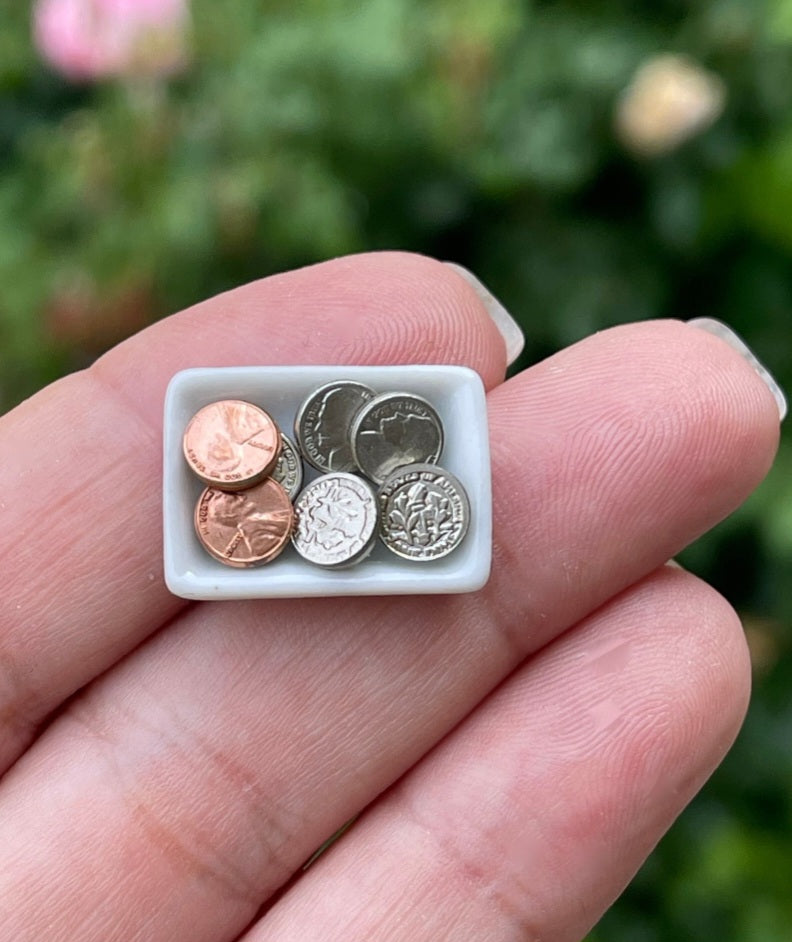
When pushing the absolute boundaries of mask stereolithography (MSLA) and stereolithography (SLA) 3D printing, scale becomes the ultimate technical bottleneck. Standard tabletop gaming miniatures traditionally sit at the 28mm to 32mm hero scale, where facial features, leather straps, and chainmail links are crisply defined. However, as scale modelers and micro-wargamers experiment with sub-15mm, 10mm, or even true 6mm epic scale figures, a critical question emerges: at what precise micrometric threshold do intricate details completely blur, dissolve, or fail to resolve? Understanding the physical limits of UV photopolymer physics, pixel pitch, and light diffraction helps local makers optimize their slicing parameters before committing hours to a failing print run.
Understanding LCD Pixel Pitch Limitations:
The XY resolution of your resin printer—determined by the pixel size of the mono-LCD screen (often ranging between 18 to 35 microns)—acts as the hard mathematical floor for how small a single structural edge or strap can be rendered.
The Physics of Light Bleed and Diffraction:
UV light passing through mask pixels inevitably scatters slightly within the liquid resin, causing microscopic features like fingers or sword blades to fuse together if exposure times are even marginally too high.
Resin Viscosity and Surface Tension Failures:
As features shrink to sub-millimeter widths, the surface tension of uncured resin during the peel cycle can easily snap fragile microscopic appendages off the model entirely.
Optimizing Anti-Aliasing (AA) Settings:
Fine-tuning grayscale anti-aliasing in your slicer can trick the human eye into perceiving smooth curves on tiny figures, but aggressive AA can also wipe out ultra-fine surface textures.
Pushing these microscopic boundaries further requires careful manipulation of exposure calibration and mechanical orientation. At extreme miniature scales, standard 50-micron layer heights are far too coarse, requiring makers to drop down to 20-micron or even 10-micron layer heights to preserve vertical contour gradients on faces and clothing folds. Furthermore, standard opaque grey resins often mask fine details better than translucent formulas, because translucent resins allow light to bounce internally within the cured structure, blurring sharp volumetric edges.
Support structures at micro-scales demand surgical precision. A heavy auto-generated support tip that works wonders on a 32mm hero will literally obliterate the entire torso of a 6mm scale infantryman. Transitioning to ultra-fine, pin-point manual supports spaced closely together ensures the model remains anchored to the build plate without tearing away microscopic details during the violent peel sequence. By mastering these micro-engineering tolerances, makers can achieve breathtaking fidelity even at microscopic scales.
Navigating the limits of micro-scale fidelity also requires accounting for the optical properties of the photopolymer itself and the digital slicing adjustments made before export. When light passes through a high-resolution LCD mask, diffraction and internal scattering can cause sub-millimeter geometry to bloat, fusing tiny sword blades or facial features into an amorphous blob. To counter this, advanced makers utilize pixel-level exposure compensation and grayscale anti-aliasing features in their slicers. These software tools modulate the light intensity on boundary pixels, effectively smoothing out jagged digital stairs and tricking the human eye into perceiving clean curvature down to the sub-micron level, even when pushing models below standard tabletop scales.
Post-curing management plays a definitive role in whether micro-features survive long-term display or handling. Over-curing tiny figures under intense UV light can cause micro-structures to become hyper-brittle, leading to micro-cracking along stress points where support tips were removed. Implementing a controlled, stepped post-cure routine—utilizing warm water baths during UV exposure or limiting total exposure duration for thin cross-sections—preserves the slight mechanical elasticity needed to prevent delicate weapons and fingers from snapping off at the slightest touch.


