
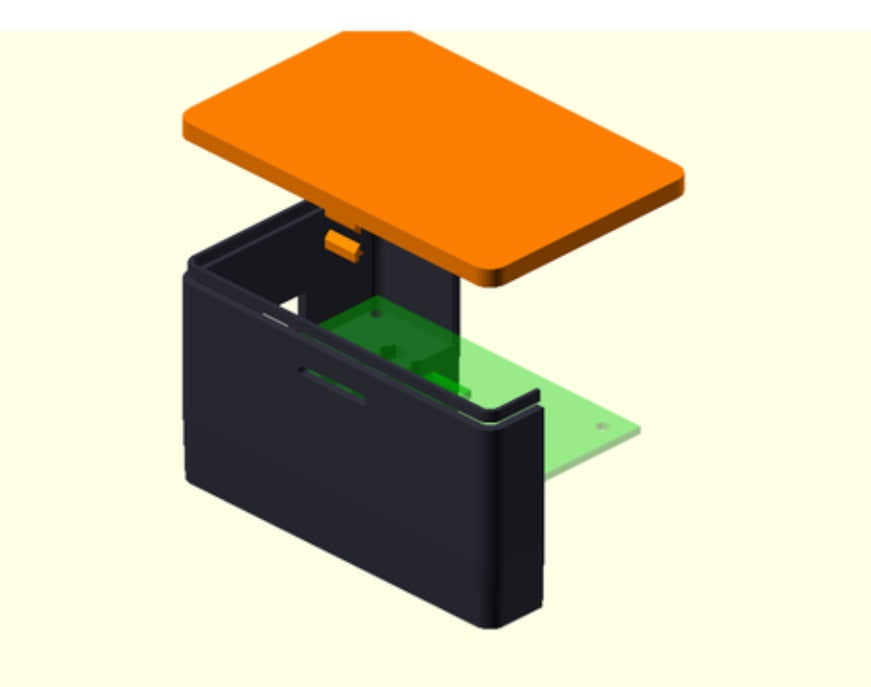
Designing Reliable Snap-Fit Joints for Functional 3D Printed Assemblies: Mechanics, Tolerances, and Geometries
Integrating mechanical snap-fits into 3D printed assemblies is one of the most efficient ways to eliminate metal fasteners, speed up final product assembly, and create clean, professional consumer or industrial enclosures. However, unlike injection-molded plastics that utilize flexible, isotropic thermoplastics with high elongation at break, 3D printed materials present unique structural challenges. Because fused deposition modeling builds parts layer by layer, cantilever snap joints are highly susceptible to brittle failure or permanent deformation if designed without careful attention to deflection strain, anisotropic layer adhesion, and correct geometric tolerances.
Understanding Snap-Fit Mechanics in Additive Manufacturing
Cantilever Beam Deflection:
Most functional snap-fits rely on a cantilever beam design where a protruding hook deflects outward during assembly and snaps back into a mating undercut; calculating the allowable bending stress without exceeding the polymer's yield point is critical for preventing snap-off.
Anisotropic Stress Vulnerability:
If a snap-fit arm is oriented incorrectly on the build plate, the bending deflection force will pull directly against the weaker Z-axis layer adhesion lines, resulting in premature snapping or delamination during the very first assembly cycle.
Material Selection and Ellection Limits:
Engineering thermoplastics like ABS, ASA, polycarbonate, or tough PLA variants offer the necessary flexural modulus and impact resistance, whereas brittle carbon-fiber composites or standard polyactic acid will frequently fracture under repeated elastic deflection.
Shop Floor Rules for Designing and Slicing Snap-Fits
Optimizing the Undercut Angle:
Design entry and exit angles between 30 and 45 degrees to minimize the insertion force required while ensuring the locking shoulder maintains a secure 90-degree retention flat to prevent accidental pull-out.
Integrating Generous Fillets at the Root:
Sharp 90-degree corners where the snap-fit arm meets the main body act as severe stress concentrators; adding a large radius fillet distributes bending loads across a wider cross-section.
Strategic Part Orientation:
Always print snap-fit components flat on the build plate or angled so that extrusion lines run continuously along the length of the flexing arm, ensuring the raw polymer strands absorb the bending moments rather than the layer bonds.
Mastering snap-fit design bridges the gap between basic rapid prototyping and true mechanical engineering on the shop floor. By applying these structural principles, your workshop can manufacture robust, friction-locked enclosures and modular assemblies that withstand hundreds of assembly and disassembly cycles without structural degradation.


