
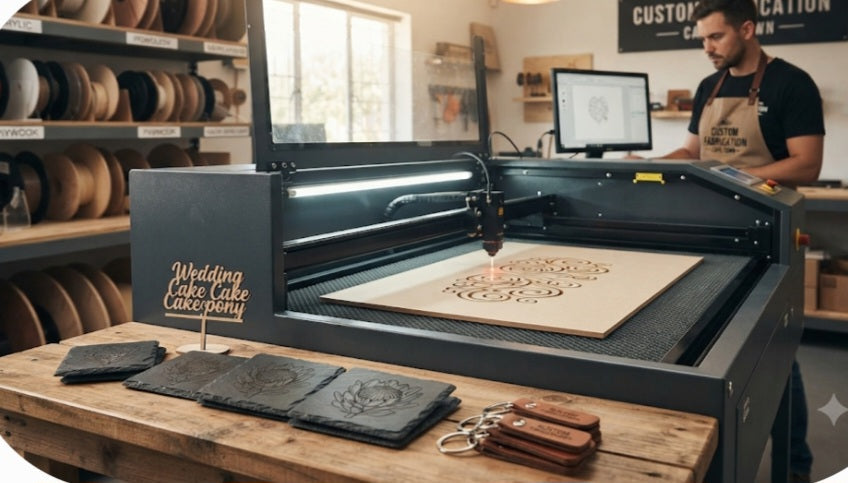
Pricing custom laser-cutting and engraving jobs is one of the trickiest hurdles for local makers and small business owners.
Price too low, and load-shedding headaches, machine maintenance, and endless file tweaks will eat away all your profits. Price too high, and local clients will walk straight to a competitor.
If you are running a laser business in South Africa—whether you are working from a garage in Johannesburg with a fiber laser or running a CO2 setup in Cape Town—you need a formula that guarantees you actually get paid for your time, materials, and risk.
The Core Pricing Formula
At its foundation, sustainable pricing relies on accounting for every single cent that goes into a product. A reliable baseline formula used by professional fabrication shops is:
Final price=(Material Cost+Overhead+Labor Time+Machine Time)×Profit Markup
Breaking Down Your Costs
Material Costs & Wastage
South African material suppliers (like Maizey, Perspex SA, or local timber merchants) price goods in Rands per sheet (e.g., Supawood/MDF, acrylic, PG Bison veneer, or leather).
The Trap: Don’t just calculate the exact size of the piece you cut.
The Fix: Always add a 10% to 15% wastage buffer to account for offcuts, mis-engravings, and edge burns. Factor in delivery or courier fees from your supplier too.
Machine Time & Consumables
Your laser machine is your workhorse. It consumes electricity (and backup inverter/generator fuel during power outages), and parts wear out. CO2 laser tubes, lenses, mirrors, and focal lenses degrade and need replacing.
Most South African maker spaces and commercial services charge a machine rate ranging from R6.00 to R12.00+ per minute of active cutting/engraving time, depending on the complexity and power of the machine.
Design and Setup Labor
Clients often send messy artwork—closed paths missing, overlapping vector lines, or low-res JPEGs that need tracing. Your design time is valuable.
Charge a separate setup fee or design hourly rate (typically ranging from R250 to R400 per hour in South Africa).
Overhead Expenses
What does it cost just to keep your doors open every month?
Shopify subscription, apps, and domain fees
Internet and mobile data
Workshop rent or a portion of your home utility/municipal costs
Software subscriptions (Adobe Illustrator, LightBurn, CorelDRAW)
Packaging materials (boxes, bubble wrap, branded tape)
Choose Your Pricing Model
Depending on whether you are selling bulk corporate gifts or one-off custom wedding signage on your Shopify site, your pricing strategy will shift.
Option A: Cost-Plus Pricing (Best for Custom Fabrication & B2B)
Add up your exact materials, machine runtime, and labor, then apply a markup multiplier (usually 1.5x to 2.5x) to account for business growth and risk.
Example: If a custom corporate branding job costs R200 in materials/electricity/time to produce, applying a 2x markup brings your retail price to R400.
Option B: Value-Based Pricing (Best for Unique Retail & Personalization)
If you are selling a deeply emotional product—like a bespoke multi-layered 3D wedding guest book or an intricate portrait engraving—don't price based solely on how long the laser took. Price based on the perceived value to the customer. If an item solves a unique problem or brings high sentimental value, customers are willing to pay significantly more.
Option C: Tiered Fixed Pricing (Best for Shopify E-commerce)
If you sell standard items like engraved tumblers, chopping boards, or cake toppers directly on your Shopify store, use a fixed catalog price list. Factor your average production time and material cost into a flat fee so customers can check out seamlessly without requesting custom quotes.
Four Golden Rules for the South African Market
- Set a Minimum Job Fee: Never turn on your laser for pocket change. Many South African shops enforce a minimum call-out or job fee (e.g., R150 to R500) just to cover the administration, file setup, and loading time, regardless of how small the cut is.
2. Account for Load-Shedding & Generator Costs: Running generators or heavy UPS/inverter setups spikes your operational risks and overheads. Ensure your hourly or minute rates factor in these infrastructural realities.
3. Offer Wholesale Tiers: If a local corporate client wants 500 branded keyrings, scale your machine time rate down slightly to win the volume, but never drop below your baseline cost threshold.
4. Itemize Your Quotes: When sending formal invoices or email quotes via Shopify/Xero, break down Design, Material, Cutting Time, and Finishing.
Transparency builds immense trust and stops clients from complaining that "it only took the machine 2 minutes to cut!"
Wrapping It Up
Pricing your laser work shouldn't be a guessing game based on what random competitors on Facebook Marketplace are charging. Calculate your real-world expenses, value your craftsmanship, and protect your margins. When your pricing is structured correctly, every item leaving your workshop is actively growing a sustainable, profitable South African business.


