
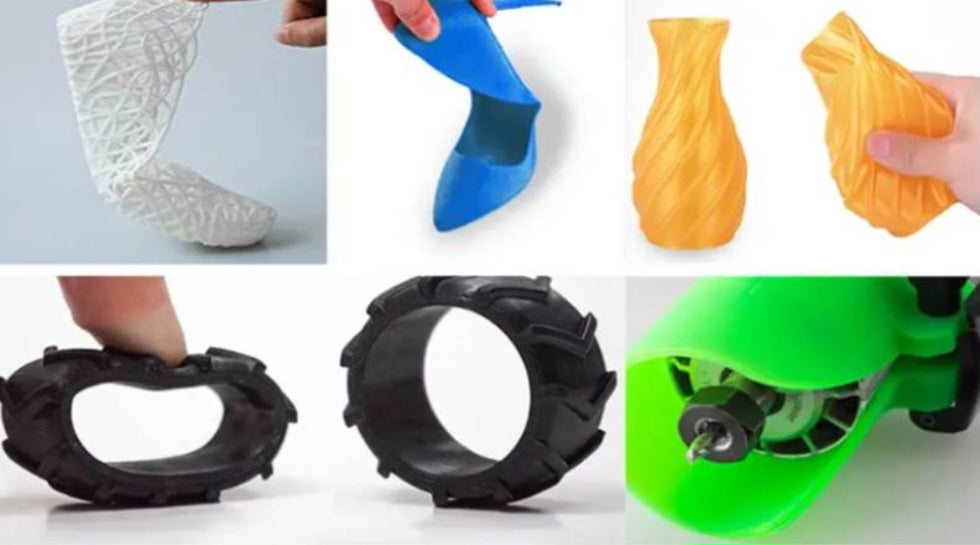
TPU (Thermoplastic Polyurethane) is definitely more challenging than PLA, but it is not impossible. Many people find it intimidating because it behaves like "wet spaghetti"—it’s so flexible that it wants to buckle and jam inside the extruder instead of being pushed through the nozzle.
Is TPU Difficult to Print? (A Beginner's Guide)
Printing with TPU is a step up in difficulty, but you can master it by controlling a few key variables. If you treat it with a bit of extra care, it’s one of the most useful materials for making gaskets, phone cases, and shock-absorbing parts.
The 3 Rules for TPU Success
- Slow Down: TPU cannot handle the high speeds of PLA. Aim for a print speed of 20–30 mm/s. Patience is the secret to a successful flexible print.
2. Dry Your Filament: TPU is extremely "hygroscopic," meaning it sucks moisture out of the air like a sponge. If your prints look bubbly or stringy, your filament is likely wet. Dry it in a filament dryer or dehydrator before use.
3. Minimize Retraction: High retraction speeds can cause the soft filament to stretch or kink inside your printer. Keep your retraction distance very short (or turn it off entirely if your printer allows) to prevent jams.
Pro-Tips
Direct Drive is King: If your printer has a direct-drive extruder, you’ll have a much easier time than those with a long Bowden tube.
Watch the Bed Adhesion: TPU sticks very well to build plates. If you're using a smooth PEI sheet, a little glue stick can act as a "release agent" so you don't accidentally rip the coating off your plate when removing the print.
Test Small: Always run a small test cube before starting a long print to make sure your flow rate and temperature are dialed in.
The "Flexible" Advantage
While TPU requires a bit more patience to get right, the results are unmatched by standard rigid materials. Because it is flexible, it doesn't crack or shatter under stress like PLA or PETG. It is the perfect choice for parts that need to bend, compress, or absorb impact, such as custom drone components, vibration-dampening feet for your printer, or even custom-fit wearables.
Once you learn to tame the material, it opens up an entirely new range of functional projects for your 3D printer.


