
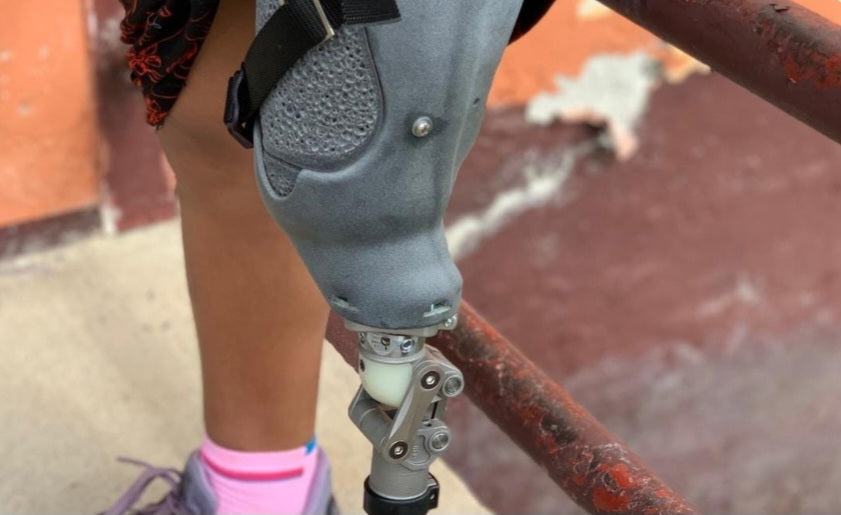
Personalized Care Through Digital Precision
The integration of 3D scanning into the medical field is truly a heartwarming advancement, as it replaces impersonal, uncomfortable clinical procedures with non-invasive, high-precision digital care.
By capturing the unique geometry of the human body in seconds, medical professionals can move away from "one-size-fits-all" solutions and create treatments that are as unique as the patients themselves.
The Transformation of Orthotics and Prosthetics
For patients requiring artificial limbs, braces, or custom insoles, 3D scanning has eliminated the archaic and often stressful process of plaster casting.
Total Comfort:
Using non-contact light or laser scanners, practitioners can digitize a residual limb or foot without touching the patient. This is particularly gentle for those with sensitive skin, burn injuries, or complex anatomical shapes.
Perfect Fit, Faster:
Because the scan is digital, it can be immediately converted into a CAD model and refined for a perfect, anatomical fit. This precision reduces pressure points, increases comfort, and ensures the device functions as a natural extension of the patient's body.
Consistent Evolution:
As a patient’s anatomy changes—whether through growth in a child or the healing process of a residual limb—scans can be repeated to track progress and update the design without requiring the patient to undergo another tedious molding session.
Enhancing Surgical Planning and Implants
Beyond wearables, 3D scanning is revolutionizing the operating room by providing surgeons with an exact, 3D "map" of the patient’s anatomy.
Virtual Rehearsals:
Surgeons can take scan data to create accurate digital or physical models of a tumor or malformed bone, allowing them to practice complex procedures beforehand. This "pre-gaming" of surgery significantly reduces operation time, minimizes risk, and improves recovery outcomes.
Customized Implants:
Whether it’s a cranial plate for a trauma patient or a specific dental implant, 3D scanning allows for the design of implants that match the patient's bone structure with sub-millimeter accuracy, leading to better integration and faster healing.
Empowering Patients and Clinicians
The shift toward 3D-driven healthcare also fosters a stronger sense of trust and understanding between doctors and patients. Being able to see a high-resolution, full-color 3D model of their own anatomy on a screen allows patients to better understand their condition and the proposed treatment plan.
This transparency, combined with the speed of digital workflows, makes medical interventions less intimidating and more accessible, ensuring that patients receive the high-quality, compassionate care they deserve.


