
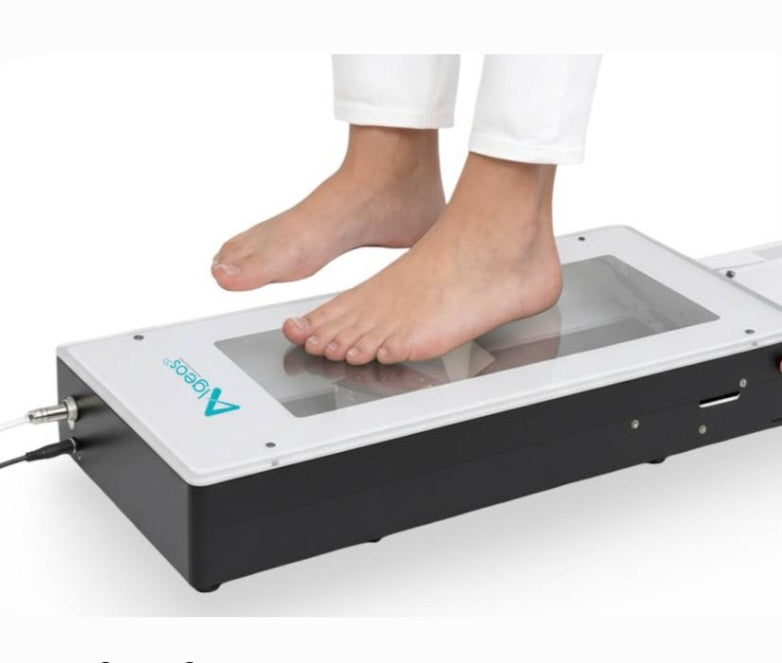
Precision in Motion: The Power of 3D Scanning for Custom Orthotics
When we talk about comfort and mobility, orthotics are at the very heart of the conversation.
Whether it is custom insoles for improved posture or specialized braces for injury recovery, the difference between "functional" and "transformative" lies in the fit. 3D scanning has revolutionized the orthotics industry by moving away from messy, traditional casting methods toward a digital experience that is as precise as it is comfortable.
The Move From Plaster to Pixels
Historically, getting a custom orthotic meant sitting through the cold, time-consuming, and often uncomfortable process of having a plaster cast molded to your body. Today, that has been replaced by rapid, non-contact 3D scanning.
Zero-Contact Comfort:
A clinical-grade 3D scanner can capture the exact geometry of a foot, ankle, or limb in a matter of seconds. Because the scanner never needs to physically touch the patient, it is a much gentler experience—perfect for patients with sensitive areas, inflammation, or post-surgical tenderness.
Unmatched Accuracy:
Traditional casting is prone to "human error," where the shape can be distorted by the weight of the casting material or the pressure applied during the molding. 3D scanning captures the anatomy exactly as it is, down to the sub-millimeter level, ensuring that the final orthotic device fits perfectly from day one.
Building Personalized Solutions with Digital Data
Once the scan is complete, it is uploaded as a digital file, acting as the foundation for the entire design process.
Dynamic Design:
Because the data is digital, engineers can adjust the model to provide support exactly where it is needed most. They can add relief zones for pressure points or integrate corrective features into the device design, creating a level of personalization that is simply impossible with mass-produced solutions.
The Digital Archive:
One of the most beautiful aspects of this technology is the ability to track a patient’s journey. By saving each scan, clinicians can document how a patient’s anatomy changes over time, ensuring that as your body evolves, your orthotics can be updated to support your ongoing progress.
A Future of Improved Mobility
The goal of orthotics is to restore independence, and 3D scanning provides the data needed to make that happen faster.
By turning patient anatomy into a precise digital blueprint, we are not just making braces or insoles; we are giving people back the ability to walk, stand, and move with confidence and ease.
It is a wonderful blend of high-end engineering and human-centered care, ensuring that every step you take is supported by the perfect design.


