
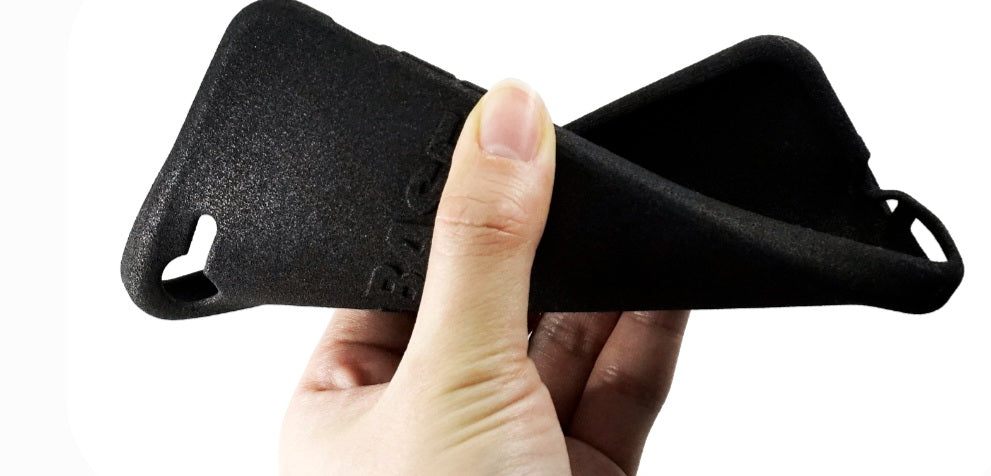
The Best Filaments for Flexible and Elastic Parts
When your project calls for parts that need to stretch, compress, or bend without snapping, you move out of the world of rigid plastics like PLA and into the realm of flexible filaments. These materials are essentially blends of plastic and rubber, generally classified as Thermoplastic Elastomers (TPE).
Top Choices for Flexibility
- TPU (Thermoplastic Polyurethane) – The Industry Standard
TPU is the most popular and widely used flexible filament. It strikes the best balance between being rubber-like and remaining durable enough to handle mechanical stress.
Why choose it: Excellent abrasion resistance, oil/grease resistance, and impressive shock absorption.
Best for: Phone cases, gaskets, seals, protective bumpers, and wearable gear.
Printability: It is generally stiffer than other flexible materials (often around 95A hardness), making it easier to feed through an extruder than ultra-soft options.
2. TPE (Thermoplastic Elastomer) – Maximum Stretch
While TPU is technically a type of TPE, in the 3D printing community, "TPE" usually refers to even softer, squishier, and more rubber-like filaments.
Why choose it: It offers superior elasticity compared to TPU, feeling more like a traditional rubber band.
Best for: Comfort-focused grips, soft toys, and highly elastic seals.
Printability: Harder to print than TPU due to its extreme softness, which can lead to jamming in the extruder.
3. Flexible (Soft) PLA – The Beginner-Friendly Option
If you want some bendability without the headache of managing elastic, stringy filaments, flexible PLA is a great middle ground.
Why choose it: It offers mild flexibility while retaining the ease-of-printing characteristics of regular PLA.
Best for: Simple bendable prototypes, learning the basics of flexible printing, or non-critical parts that don't need intense elasticity.
Pro-Tips for Printing Flexible Parts
Flexible filaments behave differently than rigid ones. To get the best results:
Use Direct Drive: A direct drive extruder is highly recommended because it minimizes the distance the filament travels, preventing it from buckling or kinking.
Slow Down: Print at a slow, consistent speed (typically 15–30 mm/s) to prevent jams.
Manage Moisture: Flexible materials like TPU are highly hygroscopic (they absorb moisture from the air), which causes bubbles and weak layers. Store them in an airtight container with desiccant or use a filament dryer.
Minimize Retraction: High retraction settings can cause flexible filament to stretch and clog the nozzle; keep them minimal or disable them entirely if possible.


