
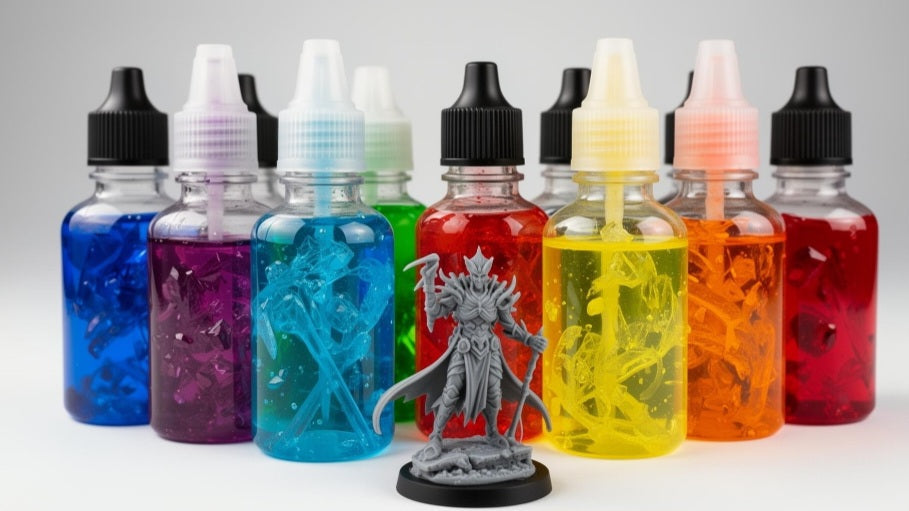
If you've recently invested in a resin 3D printer (SLA, MSLA, or LCD), choosing the right bottle of resin can feel overwhelming. Walk into any online marketplace, and you'll find standard, water-washable, tough, flexible, and plant-based resins staring back at you.
Picking the wrong resin for your project can lead to brittle models, messy cleanups, or failed prints. Here is a breakdown of the most common types of 3D printing resin and how to choose the right one for your workshop.
Standard Resin (The All-Rounder)
Standard photopolymer resin is the most popular and budget-friendly option on the market. It is designed for general-use printing where fine detail is the top priority.
Best For:
Miniatures, tabletop gaming figures, detailed display models, and decorative trinkets.
Pros:
Highly affordable, captures ultra-fine details, cures quickly, and comes in a massive variety of vibrant colors.
Cons:
Naturally brittle. If dropped from a height or handled too roughly, thin parts (like swords or fingers) will snap easily.
Cleanup:
Requires isopropyl alcohol (IPA) for post-processing wash.
Water-Washable Resin (The Low-Mess Option)
For hobbyists who want to avoid handling gallons of harsh isopropyl alcohol, water-washable resin is a game-changer. It contains emulsifiers that allow un-cured resin to be rinsed off directly under tap water.
Best For:
Beginners, indoor hobbyists, classrooms, and makers with limited workshop ventilation or space.
Pros:
Saves money and hassle on chemical solvents; cleanup is fast and straightforward.
Cons:
Slightly more brittle than standard resin, and you must properly evaporate or cure your wash water waste before disposing of it down the drain (never dump raw resin water straight into local ecosystems).
ABS-Like / Tough Resin (The Durable Choice)
Standard resin breaks under stress, but "ABS-like" or "tough" engineering resins are formulated to mimic the impact resistance and flexibility of traditional injection-molded plastics.
Best For:
Functional mechanical parts, functional snap-fit enclosures, hinges, tools, and items subjected to daily wear and tear.
Pros:
High tensile strength, less brittle, and capable of bending slightly instead of shattering upon impact.
Cons:
Usually more expensive than standard resin and can have a slightly higher viscosity (thickness).
Plant-Based / Bio-Resin (The Eco-Conscious Pick)
Manufactured using soybean or other renewable plant oils rather than purely petroleum-based chemicals, bio-resins are marketed as a greener alternative for eco-conscious makers.
Best For:
Everyday hobby printing where you want to minimize chemical odors and petroleum reliance.
Pros:
Typically emits a much lower, less harsh odor during printing and utilizes renewable raw materials.
Cons:
Can still be brittle, requires standard chemical or water washing depending on the specific brand formula, and sits at a slightly higher price point.
Castable Resin (The Jewelry Maker's Choice)
If your workflow involves lost-wax casting to produce metal jewelry or metal mechanical parts, castable resin is a specialized necessity.
Best For:
Custom jewelry rings, pendants, and fine metal casting.
Pros:
Burns out cleanly in a kiln without leaving ash residue, allowing for high-precision metal duplication.
Cons:
Tricky to dial in print settings, highly brittle, and expensive.
Quick Buying Checklist
Before clicking "buy," ask yourself these three questions:
What is the end use? If it sits on a shelf, buy Standard. If it needs to take a drop or handle stress, buy ABS-Like / Tough.
What is your cleanup setup? If you hate working with large quantities of IPA, go with Water-Washable.
Do you have proper safety gear? No matter which resin you choose, always wear nitrile gloves, safety glasses, and operate in a well-ventilated room or enclosure with an active carbon filter.
Modern high-speed resin printers are increasingly utilizing ceramic-reinforced and engineering-grade ceramic resins that can withstand temperatures over 200°C, opening up new possibilities for direct end-use functional tooling and high-heat mold making.


