
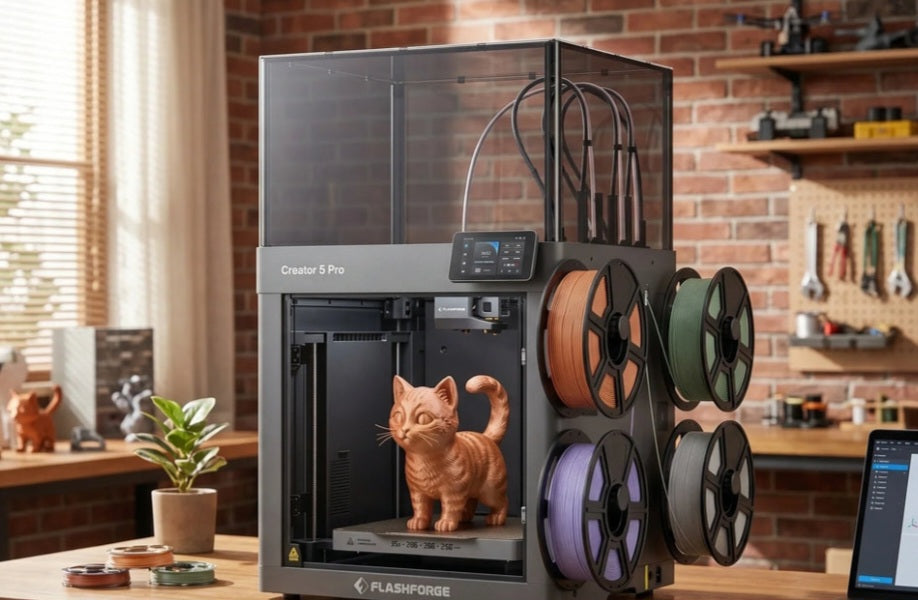
In a professional product design studio, every minute spent troubleshooting hardware or waiting on a single stalled machine directly impacts client delivery dates and project profitability. When you are iterating rapidly through ergonomic handles, snap-fit consumer electronics housings, and functional mechanical linkages, relying on just one 3D printer creates an inevitable bottleneck. Designers constantly face the dilemma of whether to invest heavily in a single, ultra-expensive do-it-all flagship machine or deploy a dual-printer strategy. For South African design studios watching operational expenses and capital outlays measured in Rands, choosing the right hardware ecosystem is a strategic decision that dictates how efficiently ideas transition from digital CAD files to physical prototypes.
The Risks of a Single-Machine Ecosystem:
Relying on one printer means that if a hotend clogs or a motherboard fails mid-print, your entire studio workflow screeches to a complete halt until replacement parts arrive.
The Dual-Printer Strategy (FDM + Resin):
Pairing a rugged, high-speed FDM workhorse for structural parts with an MSLA resin printer for ultra-detailed aesthetic models covers all prototyping requirements.
Material Versatility Across Two Platforms:
Having a dual setup allows you to run tough engineering thermoplastics like PETG or ABS on one machine while simultaneously curing high-resolution display models in photopolymer resin.
Redundancy and Workflow Optimization: Staggering print jobs across two independent units keeps your development pipeline moving, allowing designers to prototype mechanical functionality and external industrial design concurrently.
Beyond raw throughput, managing a dual-machine studio setup allows design teams to match the manufacturing technology precisely to the phase of product development. Early-stage conceptual mockups and rough structural testing benefit immensely from the speed and low material cost of large-format FDM printing. Conversely, final client presentation models, intricate textures, and complex ergonomic grips require the flawless surface finish and microscopic layer resolution that only a dedicated resin ecosystem can provide. This multi-technology approach ensures that no design compromise is forced by hardware limitations.
Implementing a dual-printer workflow safeguards your business against unexpected local infrastructure challenges, such as unexpected power interruptions or load-shedding events common in South Africa. Operating independent machines connected to separate surge-protected UPS backups ensures that even if one unit experiences an issue, your studio retains active production capacity. Ultimately, investing in two specialized machines rather than pinning all your hopes on a single unit provides the reliability, agility, and professional finish that modern product design demands.


