
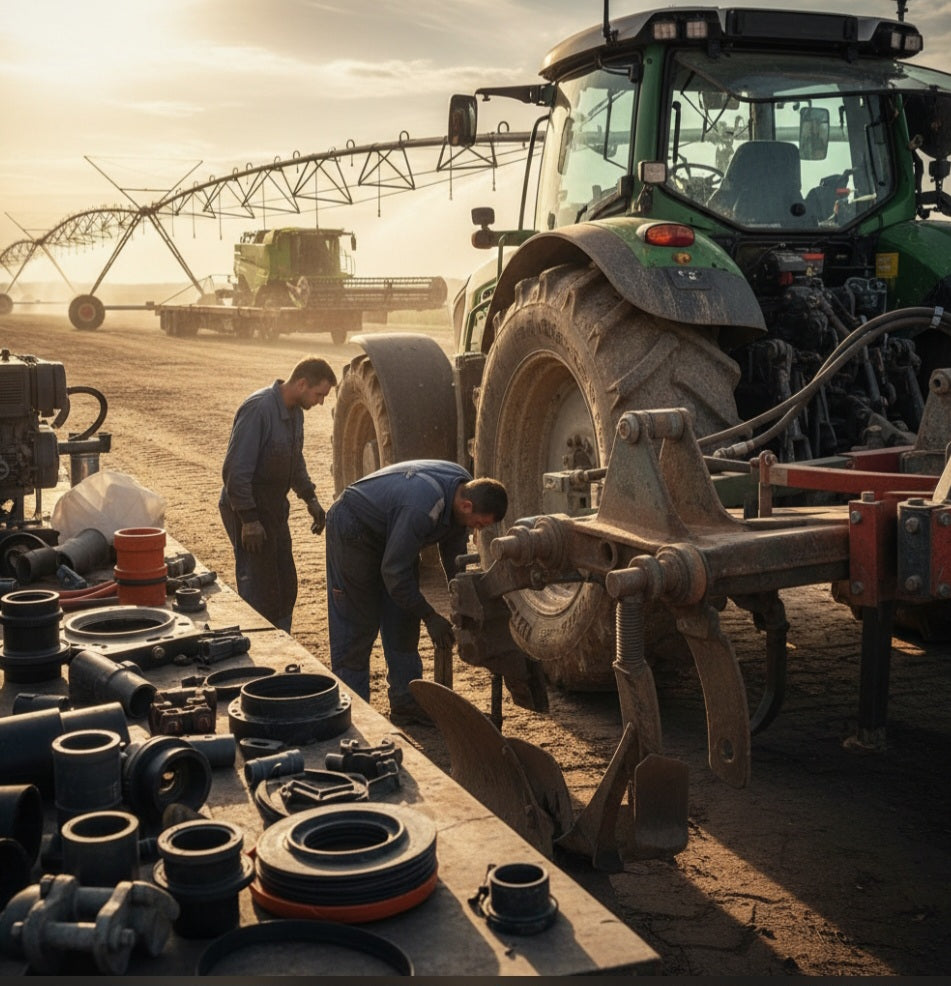
In a working agricultural or rural farm workshop, machinery downtime translates directly to lost revenue and frustrating operational delays. Whether you are managing tractors, harvesters, irrigation networks, or livestock handling systems, waiting weeks for imported OEM replacement parts to clear shipping channels is rarely an option. When a plastic clip, cable guide, or custom irrigation nozzle snaps during peak season, the ability to manufacture a reliable replacement on-site changes everything. For South African farmers and agricultural engineers investing capital into workshop equipment, 3D printing serves as an invaluable emergency lifeline—provided you know which specific spare parts actually make sense to print.
Cable Clips and Wiring Loom Protectors:
Print durable clips and guides to secure loose sensor wires and electrical harnesses against vibration, preventing chafing and short circuits.
Custom Irrigation Nozzles and Drip Adapters:
Fabricate weather-resistant replacement heads and adapter fittings on-demand to keep center-pivot systems running without waiting on slow freight.
Protective Caps, Knobs, and Lever Handles:
Quickly replace lost or broken control knobs, dust boots, and protective terminal covers using tough, impact-resistant polymers.
Specialized Mounting Brackets and Spacers:
Design and print custom brackets for GPS units, implement monitors, and auxiliary cameras tailored specifically to your tractor cab layout.
Choosing what to print requires a strict understanding of mechanical limitations, structural safety, and material performance in harsh outdoor environments. While high-stress structural components like main gearbox gears or high-load towing hitches must always remain forged steel or heavy-duty metal, 3D printing excels at secondary components, non-critical housings, and rapid prototyping jigs. Utilizing engineering-grade filaments such as UV-stabilized PETG, ASA, or carbon-fiber-reinforced nylon ensures that printed spares can withstand relentless African sun, heavy dust, moisture, and chemical exposure from fertilizers or cleaning agents.
Maintaining a digital library or archive of pre-tested CAD files for your specific machinery fleet transforms routine maintenance. Instead of scavenging through scrap bins or trying to match discontinued parts from obsolete tractors, your workshop team can simply pull up the digital model, slice it for maximum wall strength, and print a fresh replacement overnight. By combining a rugged FDM printer with smart material selection, farm workshops achieve ultimate self-reliance, keeping equipment rolling when it matters most.


