
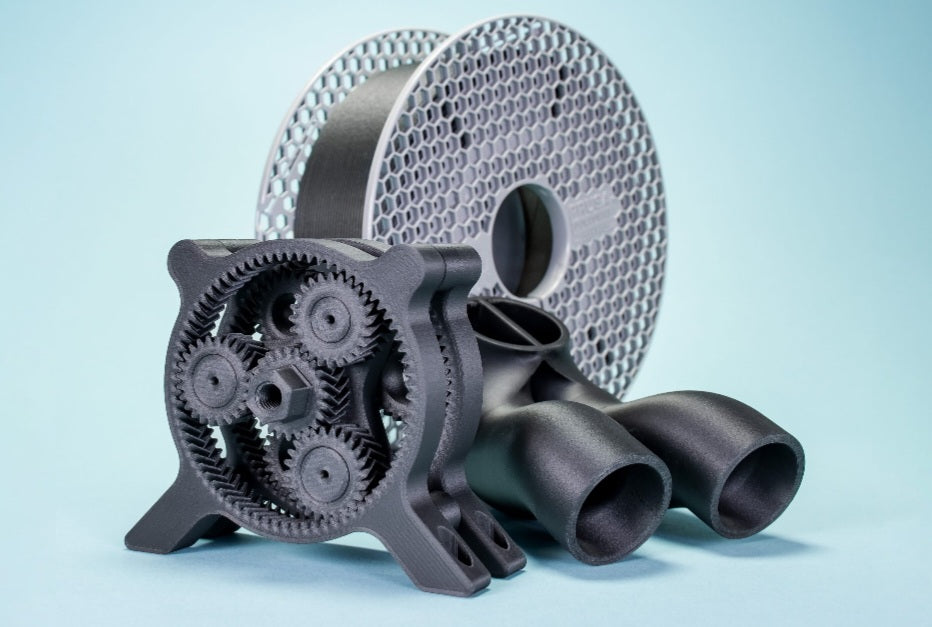
Integrating additive manufacturing into an automotive workshop or vocational technical school transforms how mechanics, hobbyists, and students approach repairs, custom modifications, and tooling fabrication. Whether you are printing replacement clips, custom carburetor spacers, or specialized diagnostic brackets, an automotive environment is vastly different from a clean office or standard classroom. Grease, metal shavings, high ambient temperatures, and rigorous daily use demand a machine built for heavy-duty reliability. For South African workshops investing capital funds measured in Rands, selecting a 3D printer with the right industrial features ensures it can handle high-stress operational demands without failing.
High-Temperature Hotends for Engineering Fillets:
Choose a printer capable of reaching 300\text{°C} or higher so you can extrude advanced polymers like ABS, ASA, and carbon-fiber-reinforced nylon that withstand under-hood engine temperatures.
Fully Enclosed Steel Chassis:
An enclosed build chamber prevents drafts from warping high-shrinkage engineering plastics while protecting sensitive mechanical components from airborne dust, metallic grit, and shop grime.
Direct-Drive Extruder Systems:
Opt for direct-drive setups to ensure smooth, responsive retraction and reliable feeding of flexible filaments, which are essential for printing custom gaskets, vibration dampers, and hose protectors.
PEI Magnetic Spring Steel Build Plates:
Select flexible textured or smooth PEI plates that allow cured parts to pop off instantly without requiring sharp razor blades, which can slip and cause injuries on greasy workshop tables.
Beyond the core mechanical specifications, an automotive-grade 3D printer must feature robust firmware safety protections, such as thermal runaway detection and automatic power-loss recovery. Power interruptions or voltage drops can occur unexpectedly during heavy shop operations, making a reliable recovery sequence crucial to saving a multi-hour print job and preventing wasted material. Furthermore, compatibility with abrasive composite filaments means the machine should come equipped with hardened steel or ruby-tipped nozzles as standard or readily available upgrades, preventing brass components from wearing down within days of printing glass-filled nylon.
Implementing an industrial printer in a mechanical workspace also changes how technicians approach custom fabrication. Instead of waiting weeks for specialized OEM clips or custom brackets to ship across the country, mechanics can design and print functional prototypes on-demand. This capability drastically reduces vehicle downtime and empowers technical students to test real-world mechanical fixes immediately, bridging digital design with heavy-duty mechanical engineering.
Finally, establishing a standardized digital archive of pre-tested automotive CAD models—such as commonly replaced clips, wiring loom holders, and diagnostic mounts—allows shop technicians and apprentices to initiate prints instantly without starting from scratch. This centralized repository maximizes workshop efficiency and ensures that every replacement part meets exact tolerance and strength specifications before installation.


