
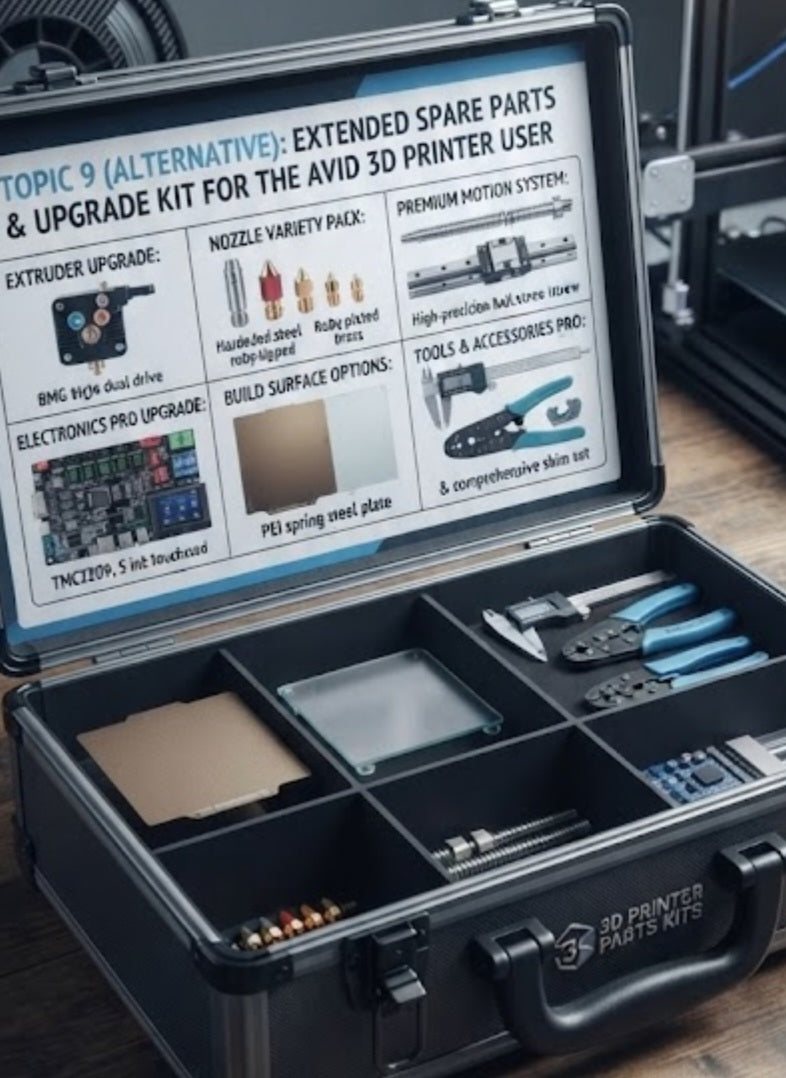
Running a desktop 3D printer without an emergency spares kit is a recipe for prolonged workshop downtime. When a high-friction component fails on a Sunday evening or right in the middle of an urgent production run, waiting days for courier delivery can completely stall your output. Assembling a dedicated inventory of critical replacement parts during your first year of operation ensures you can handle minor hardware failures instantly and keep your workflow moving forward without unnecessary delays.
Stock Extra Brass Nozzles in Standard Sizes:
Keep multiple 0.4\text{mm} and 0.6\text{mm} replacement nozzles on hand to quickly swap out worn orifices or clear stubborn jams without halting operations.
Keep Spare Bowden Tubes and PTFE Couplers:
Thermal degradation and constant retraction wear down internal tubing, making replacement PTFE lengths and secure pneumatic couplers vital emergency items.
Include Replacement Thermistors and Heater Cartridges:
These delicate electronic components are prone to sudden failure or wiring fatigue, meaning a spare hotend heating assembly prevents total machine paralysis.
Have Extra Drive Gears and Tension Springs:
Extruder gears accumulate plastic debris and wear down over time, so having backup extrusion hardware ensures consistent filament feeding.
When you rely on your equipment for daily manufacturing tasks, treating replacement components as optional extras is a costly mistake. The physical stress of melting polymers, handling abrasive filaments, and maintaining high operating temperatures places immense strain on consumable parts. Having a curated hardware kit on your shelf transforms a catastrophic breakdown into a five-minute fix. Instead of scrambling to source specialized components across local suppliers when a thermistor snaps or a nozzle strips, you can execute a quick swap and resume printing immediately.
Building this initial toolkit also teaches you the structural anatomy of your machine, turning routine maintenance into a familiar part of your shop routine. By understanding which parts take the brunt of operational wear, you can budget for replacements proactively rather than reacting to sudden hardware failures. Investing in a modest selection of vital spares safeguards your production schedule and guarantees long-term reliability for your workshop setup.
Equipping your workspace with an organized emergency inventory eliminates the vulnerability of supply chain delays and courier backlogs. Proactively managing your consumable components ensures that unexpected mechanical wear translates into a brief, manageable adjustment rather than a stalled production line.


