
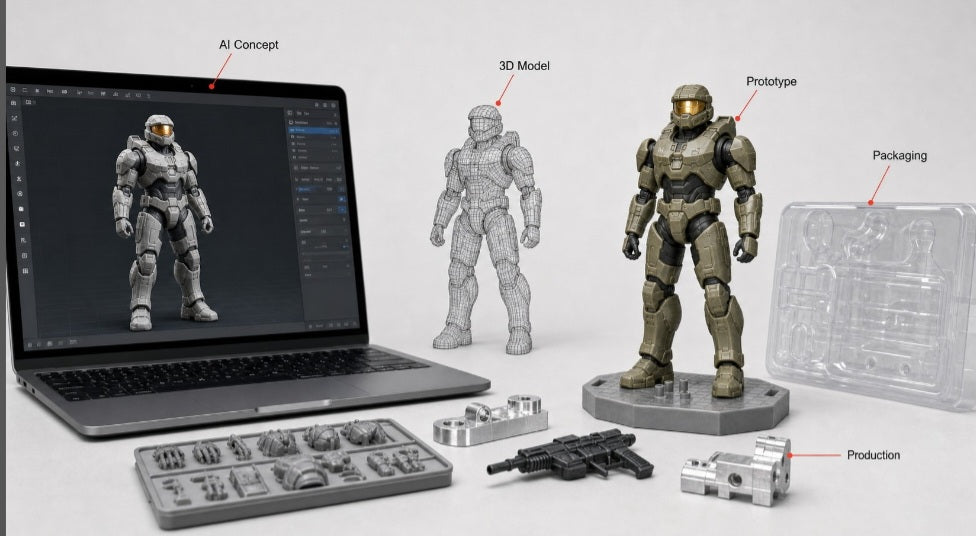
Transitioning a whimsical conceptual sketch or digital CAD model into a physical toy prototype is one of the most exciting milestones in product design. Whether you are developing modular building blocks, mechanical action figures, or interactive educational playsets, the journey from a virtual mesh to a tangible object requires a disciplined, iterative workflow. In the toy industry, how a prototype feels in a child's hand—its ergonomic weight, the smoothness of its snap-fit joints, and the absence of sharp burrs—is just as important as how it looks on a screen. For South African designers and creators managing material budgets measured in Rands, mastering the cycle of first printing, gathering physical feedback, and executing smart CAD revisions ensures your toy design evolves efficiently without wasting material.
Printing the First Rough Prototype:
Prioritize speed and low material usage by printing initial drafts with lower infill percentages and larger layer heights to evaluate overall scale and proportions.
Testing Ergonomics and Child-Safe Tolerances:
Put the first print directly into hands to evaluate grip comfort, verify that snap-fits and interlocking joints click together smoothly, and check that no choking hazards exist.
Evaluating Mechanical Articulation and Wear:
Check how hinge pins, ball joints, and sliding tracks perform under friction, identifying areas where tolerances are too loose or binding too tightly.
Executing Targeted CAD Revisions:
Feed physical insights back into your CAD software, modifying wall thicknesses, adding fillet radii to sharp corners, and adjusting clearance gaps before launching the final print.
Beyond basic mechanical checks, a successful toy prototype must also survive rigorous play-testing to evaluate structural durability. Children's toys endure high-impact drops, twisting forces, and rough handling that can quickly snap brittle plastics if wall thicknesses are inadequate or layer orientations create weak shear planes. By analyzing where structural stress fractures occur on the first test print, designers can strategically reinforce internal ribs, change infill patterns, or switch to tougher polymers like PETG to ensure the final product can withstand real-world play environments.
Documenting each iteration in a systematic design log allows creators to track how dimensional tolerances shift between different filaments and printer calibrations. This continuous loop of testing, critique, and digital refinement transforms a rough concept into a production-ready toy prototype, ensuring that when mass manufacturing begins, every moving part and interlocking connection functions flawlessly.


