
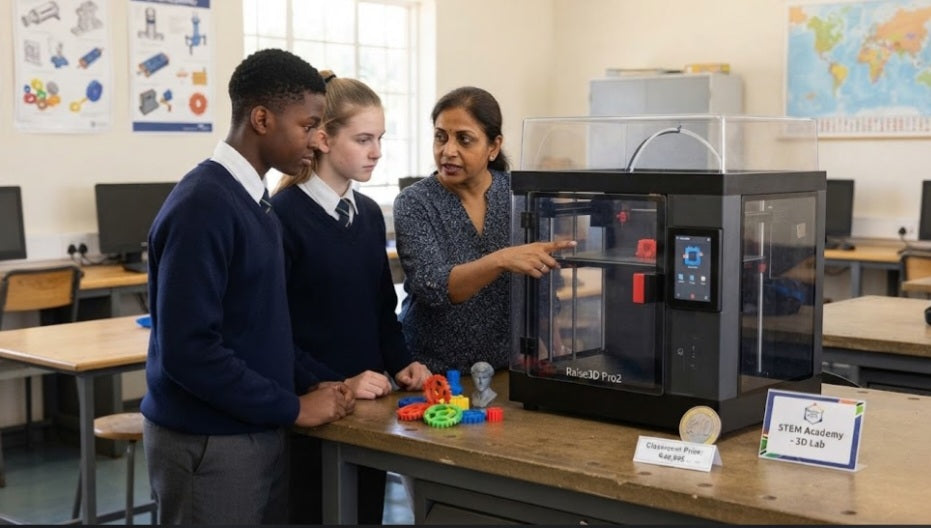
Introducing additive manufacturing into a South African school classroom is one of the most impactful investments a governing body or technology department can make, but it requires navigating unique local challenges. Whether you are operating on a strict school budget governed by Rand allocations or planning for unexpected power interruptions, choosing the right machine means looking past flashy consumer marketing. A classroom environment demands robust safety features, straightforward software accessibility, and hardware that can withstand enthusiastic student handling without constant maintenance failures.
Prioritize Local Support and Spare Parts Availability:
Choose a machine backed by South African distributors so you aren't left waiting months for imported replacement parts or struggling to clear customs when a component breaks.
Insist on Enclosed Chambers for Safety:
Select printers with fully enclosed metal or acrylic casing and locking doors to protect curious students from high-temperature hotends (200\text{°C} plus) and moving print heads.
Factor in 230V Power Stability and UPS Pairing:
Ensure your school budget accounts for an entry-level pure sine wave UPS to protect the machine's electronics and prevent failed prints during sudden municipal power cuts.
Check Slicer Software Compatibility with School Networks:
Verify that the printer's operating software works smoothly on standard school computer lab systems without violating strict IT firewall restrictions or requiring expensive recurring subscription licenses.
Equipping a local classroom with digital manufacturing tools transforms abstract concepts in mathematics, science, and design into tangible, hands-on engineering projects. However, a school workshop is vastly different from a controlled hobbyist's desk. Students need machines that feature automatic bed leveling, magnetic peel-off build plates for easy part removal without razor blades, and intuitive touchscreens that minimize user error. Furthermore, considering the reality of South African infrastructure, investing in hardware that seamlessly integrates with basic power backup solutions guarantees that your technology curriculum won't grind to a halt when the grid fluctuates.
Making the final purchasing decision involves balancing initial capital layout in Rands against long-term operational durability. Opting for open-source friendly firmware prevents the school from being locked into expensive proprietary filament ecosystems, allowing your department to source affordable materials locally. By methodically evaluating safety, structural reliability, and local vendor backup, educational institutions can foster the next generation of engineers with a reliable, future-proof manufacturing lab.


