
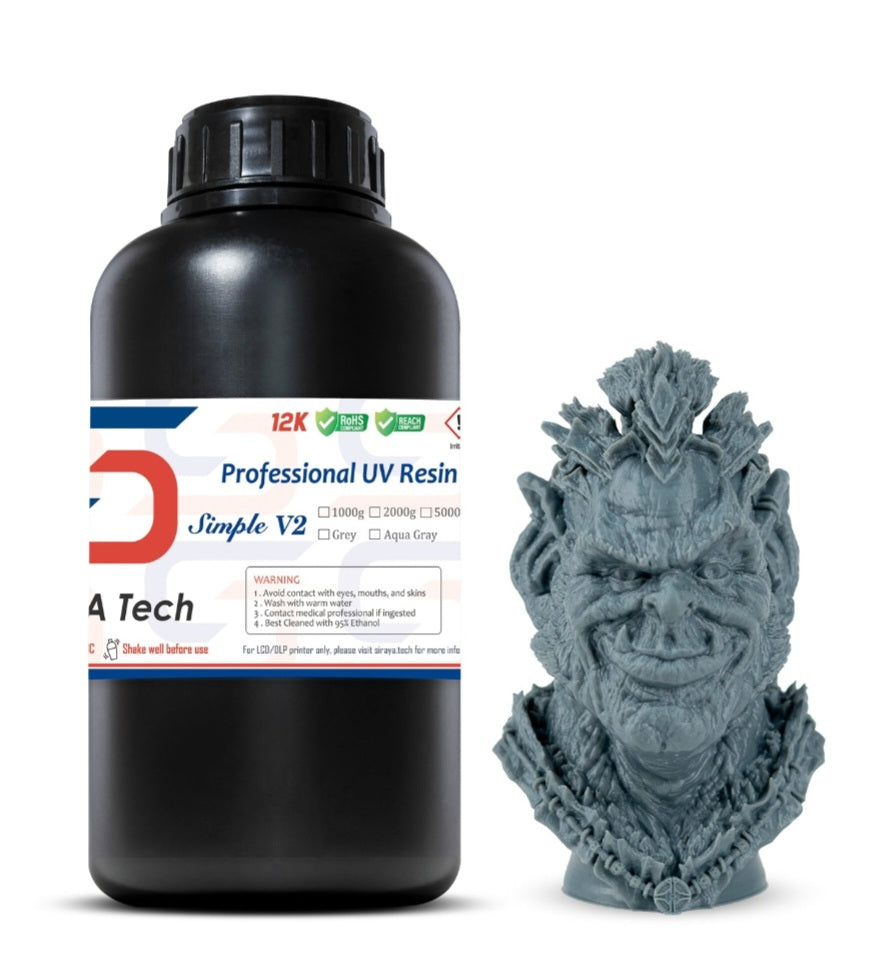
When diving into stereolithography (SLA), digital light processing (DLP), or masked stereolithography (MSLA) printing, one of the most common questions makers ask is: How long does 3D printer resin actually last?
The answer isn't a single number. The lifespan of resin involves two entirely different timelines: the shelf life of the liquid chemical in the bottle, and the physical durability of the cured 3D printed model over time.
Whether you are printing high-detail miniatures, mechanical prototypes, or specialized engineering pieces, understanding how resin ages will save you from failed prints and crumbling models.
Liquid Resin Shelf Life: How Long Does an Unopened Bottle Last?
In its liquid state, 3D printer resin is a sensitive photopolymer blend of oligomers, monomers, and photoinitiators.
Unopened Bottles:
Most manufacturers rate unopened, properly sealed bottles of standard resin for a shelf life of 12 to 24 months when stored in optimal conditions.
Opened Bottles:
Once a bottle is opened, oxygen and trace ambient light exposure reduce its stable lifespan to about 6 to 12 months.
Signs That Your Liquid Resin Has Expired
High Viscosity:
The resin pours like thick honey or syrup instead of a fluid liquid.
Clumping or Gel-like Chunks:
Solid particles form at the bottom of the bottle or float within the mixture.
Persistent Color Discoloration:
A severe yellowing or darkening shift inside a clear or tinted bottle.
Foul Odor:
A sharper, more chemically unstable smell than when it was first purchased.
Tip: You can sometimes salvage slightly aged resin by aggressively shaking the bottle or straining out clumps, but using heavily expired resin usually leads to poor layer adhesion, soft prints, or total print failures.
How Long Do Cured Resin Prints Last
Once a model has been printed, washed in IPA or water, and post-cured under UV light, its lifespan depends heavily on the type of resin used and its environment.
Standard Resins (3 to 5 Years):
Great for visual display models, miniatures, and figurines kept indoors out of direct sunlight. Over time, standard resins become brittle and prone to cracking under minor impacts.
Tough / Engineering Resins (10 to 15 Years):
Formulated to absorb mechanical shock, handle heavier loads, and endure stable indoor conditions far longer than standard formulas.
Flexible Resins (6 Months to 4 Years):
Designed to bend and stretch, but rubber-like polymers dry out, stiffen, and lose elasticity faster when exposed to heat and oxygen.
UV-Resistant Outdoor Resins (7 to 12 Years):
Specially manufactured with chemical stabilizers to resist degradation and discoloration even when exposed to outdoor elements.
What Causes Resin Prints to Degrade Over Time?
Even perfectly cured prints will eventually show signs of aging if exposed to specific environmental stressors:
Continuous UV Light Exposure
Ultraviolet radiation from sunlight is the primary enemy of cured resin. Chronic exposure breaks down internal polymer chains, causing prints to turn yellow, lose surface detail, become chalky, and develop micro-cracks.
Moisture and Humidity
High humidity can slowly weaken certain resin formulations—particularly water-washable resins if they were not completely dry before final UV curing. Trapped moisture inside hollow prints can also lead to internal pressure, warping, and splitting.
Mechanical Stress and Load
Display pieces sit safely on shelves for years, but functional parts subjected to constant friction, weight, or tension will inevitably wear down or fatigue much faster.
Best Practices to Maximize Resin and Print Lifespan
You can drastically extend the usability of both your materials and your finished models by following a few simple storage and post-processing rules:
Store Liquid Resin Correctly:
Keep bottles tightly sealed, upright, and stored in a cool, dark cabinet away from direct sunlight and extreme temperature swings (ideally between 15°C and 25°C).
Don't Skip Proper Post-Processing:
Ensure your prints are thoroughly washed of uncured surface residue and fully cured. Under-cured prints remain sticky and toxic, while severely over-cured prints turn excessively brittle.
Apply Protective Coatings:
Clear-coating your finished models with a UV-blocking acrylic spray or sealant creates a physical barrier against sunlight and moisture, buying your display pieces extra years of life.


