
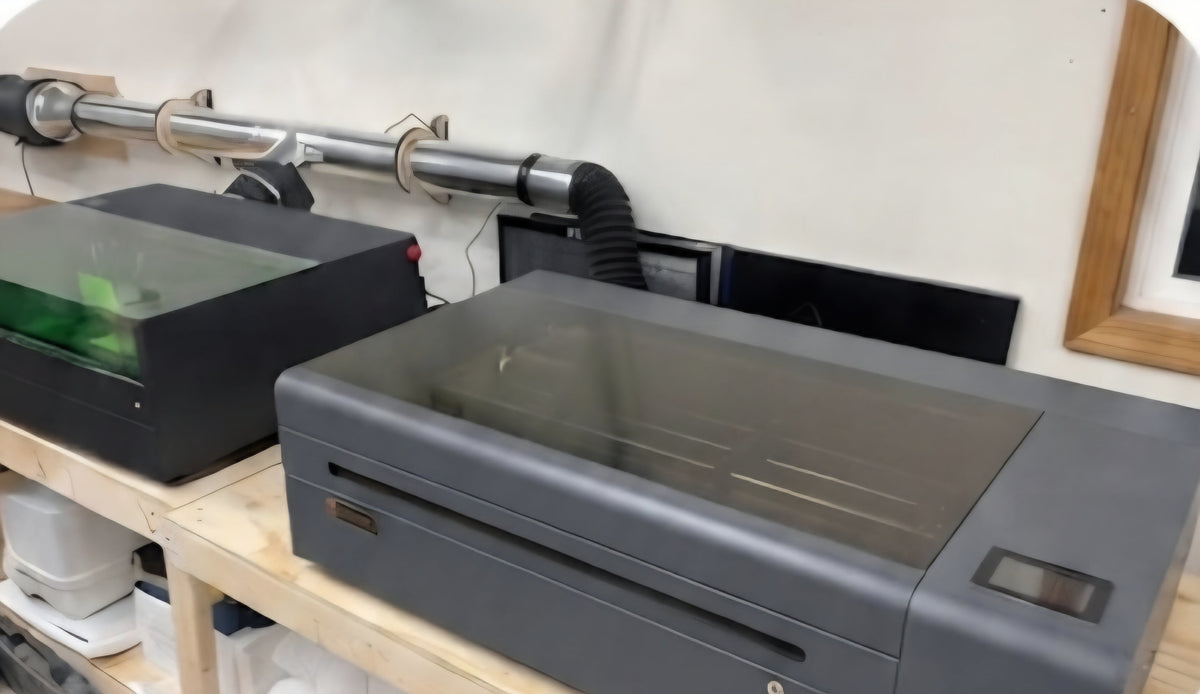
Operating a laser engraver—whether you are cutting plywood, engraving acrylic, or etching leather—produces more than just fine crafts.
It generates a massive amount of smoke, toxic gases, fine particulate matter (PM2.5), and volatile organic compounds (VOCs). Without proper ventilation and fume extraction, these fumes can irritate your lungs, coat your workshop in sticky soot, and create a serious health hazard.
Setting up a safe and effective ventilation system is essential for any workshop. Here is everything you need to know to properly vent your laser engraver.
Why Proper Fume Extraction is Non-Negotiable
Health and Safety:
Materials like cast and extruded acrylic, PVC, synthetic leather, and treated plywood release hazardous chemicals and gases when vaporized by a high-heat laser beam. Inhaling these fumes can cause headaches, dizziness, and long-term respiratory issues.
Protecting Your Equipment:
Smoke and soot settle rapidly on moving parts, guide rails, and sensitive optical components like your laser lens and mirrors. Left unvented, this residue absorbs laser energy, leading to power loss and component failure.
Fire Prevention:
Heavy accumulation of flammable dust and resin particles inside ducting or enclosed cabinets creates an ideal fuel source for stray sparks.
Key Components of a Laser Ventilation System
An effective fume extraction setup typically includes four major parts working together:
The Enclosure / Hood:
A sealed or semi-enclosed laser housing with an exhaust port ensures that smoke is captured at the source rather than leaking into your room.
The Inline Exhaust Fan:
This is the heart of your system. Standard computer fans or small desk fans are not powerful enough. You need a dedicated centrifugal inline duct fan capable of moving enough cubic feet per minute (CFM) to pull air through your ducting.
Ducting and Venting:
Flexible or rigid aluminum ducting connects your machine's exhaust port to the inline fan and routes the air safely outside or through a filtration unit.
Filtration System (Alternative to Outdoor Venting):
If you cannot vent directly outside through a window or wall, you must use a multi-stage purifier/filtration unit containing a pre-filter, a HEPA filter for fine particulates, and an activated carbon filter to neutralize toxic odors and gases.
Best Practices for Setting Up Your Exhaust
Keep Duct Runs Short and Straight:
Every bend, curve, and extra foot of ducting creates static pressure that reduces your fan's overall airflow efficiency. Keep your exhaust hose as short and direct as possible.
Ensure Balanced Airflow:
Check your honeycomb or slat bed regularly. A clean bed allows downward airflow to sweep smoke cleanly away from the bottom of your cuts, eliminating underside charring.
Position Your Exhaust Outflow Wisely:
If venting outdoors, make sure the exhaust outlet is far away from windows, doors, neighbors' property lines, or fresh air intakes.
Pro Tip: Always Run Your Fan a Little Longer
Never turn off your exhaust fan the exact second your laser finishes a job. Leave the ventilation running for 1 to 2 minutes after the job completes to clear out any residual smoke lingering in the cabinet or ductwork. This simple habit keeps your workshop completely fresh and prevents smoke from drifting back into the room when you open the lid!


