
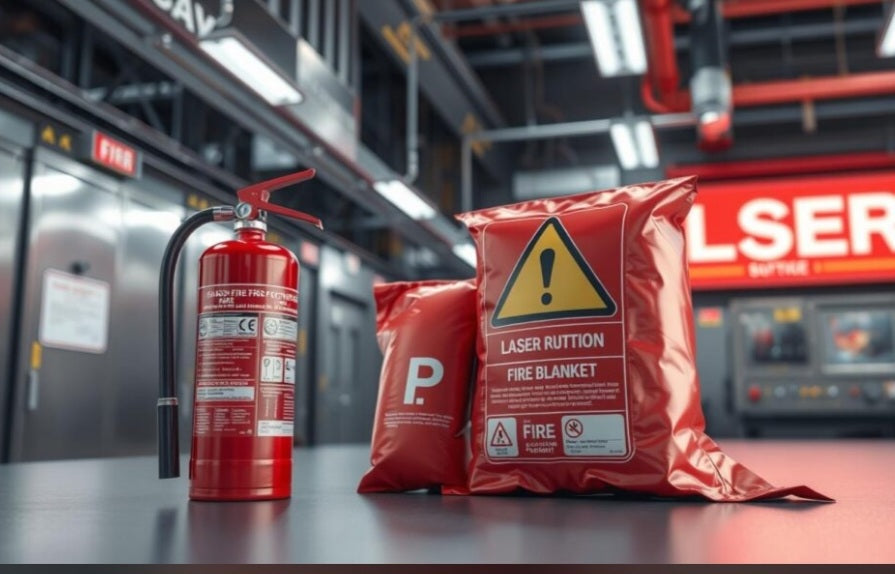
Operating a laser engraver or cutter involves high-intensity thermal energy, focused beams, and combustible materials.
While lasers are incredible tools for creating detailed crafts, they also carry a very real fire hazard. Whether you are cutting wood, acrylic, or leather, a flare-up can happen in seconds if safety protocols aren't strictly followed.
Here is a comprehensive guide on how to minimize fire risks and keep your laser workshop safe.
Never Leave a Running Laser Unattended
The single most effective rule of laser safety is never walk away from an active job.
Fires often start small—a tiny flare-up on a knot in a piece of plywood or a curling edge of acrylic can ignite in a fraction of a second.
If you are standing right by the machine, you can hit the emergency stop button or smother the flame immediately. Leaving the room, even for "just a minute," turns a minor flare-up into a catastrophic machine fire.
Maintain a Clean Bed and Interior
Resin, dust, small offcuts, and wood debris build up quickly on your honeycomb bed and the bottom of your enclosure.
Regular Cleaning:
Scrape and clean resin buildup off your honeycomb panels frequently. Sticky residue is highly flammable and acts as an accelerator when sparks hit it.
Remove Scrap Pieces:
Do not let small cut-out pieces pile up underneath the bed. These pieces can easily catch stray laser pulses or hot embers from previous cuts.
Optimize Your Laser Settings
Incorrect settings are a leading cause of excessive burning and flare-ups.
Avoid Over-Irradiating:
Running power too high combined with a speed that is too slow forces excessive heat into the material, charring the edges and increasing the risk of open flames.
Use Proper Air Assist:
A strong, consistent air assist blows away hot gases, cools the cut line, and blows out minor flare-ups instantly before they can turn into sustained flames. Ensure your air pump or compressor is functioning properly before every session.
Know Your Materials (and What to Avoid)
Different materials react to heat in vastly different ways.
Safe vs. Hazardous Woods:
Natural softwoods and hardwoods (like birch plywood, MDF, and basswood) are standard, but watch out for glues that produce heavy flare-ups.
Plastics to Avoid:
Never laser engrave or cut PVC (Polyvinyl Chloride) or Vinyl. When vaporized, PVC releases toxic chlorine gas that will rapidly corrode and destroy the metal components of your laser, in addition to creating severe health and fire hazards.
Watch for Adhesives:
Materials with heavy, sticky masking tape or low-quality glues ignite much faster than clean, raw materials.
Equip Your Workshop with the Right Safety Gear
Accidents can still happen despite best practices, so preparedness is critical.
Fire Extinguisher:
Keep a CO2 or Dry Powder (ABC) fire extinguisher mounted right next to the door of your workshop, clearly visible and easy to reach. Do not use water on an electrical or chemical fire involving machinery.
Fire Blanket:
A fire blanket hung near your laser station is ideal for safely smothering small containment fires inside the enclosure without making a messy powder discharge.
Smart Detection:
Consider installing an automatic fire suppression ball or a smart smoke/heat alarm directly above or inside your laser enclosure if you use automated setups.
Pro Tip: Watch Your Focal Point
Always ensure your material is completely flat and your focus distance is properly calibrated. If your material warps upward during a job, it changes the focal point of the laser beam, concentrating intense heat onto a smaller surface area and dramatically increasing the likelihood of a localized fire. Use magnetic pins or weight clamps to keep materials completely flat!


