
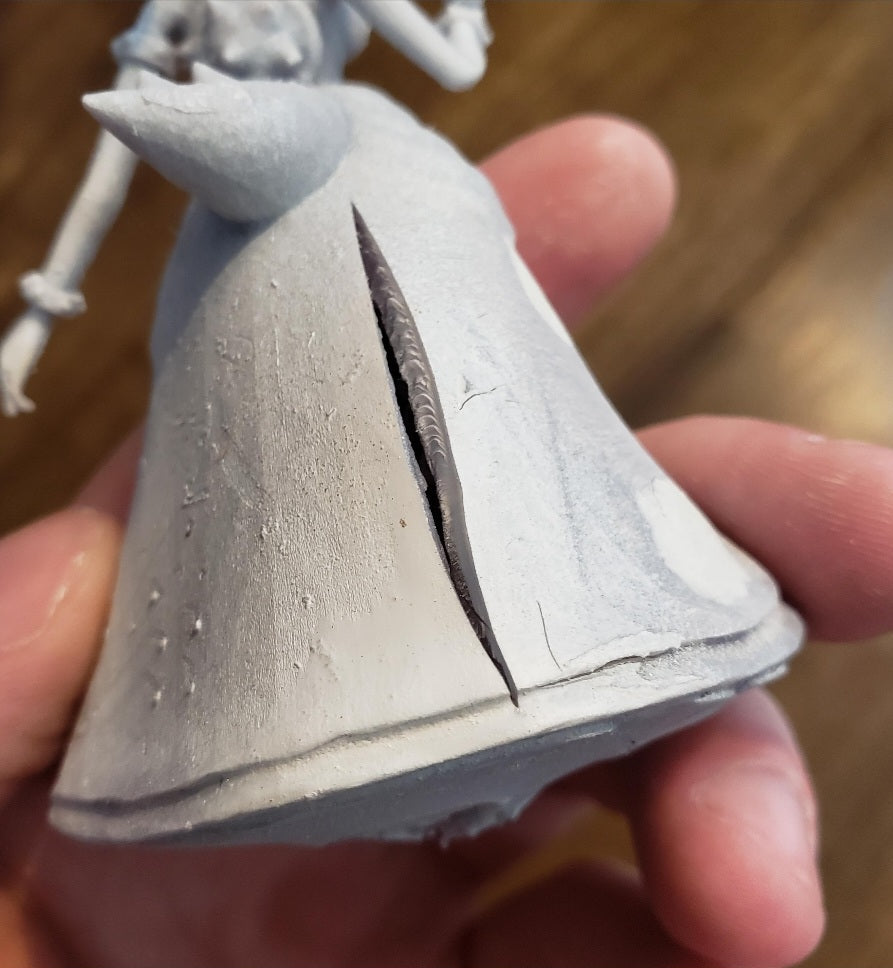
There is nothing more frustrating than spending hours perfecting a 3D model, successfully printing it, washing and curing it, only to find unsightly cracks, splits, or structural warping days later.
Resin cracking is a common issue in stereolithography (SLA) and MSLA printing, usually caused by trapped internal stresses, improper post-processing, or environmental factors.
Understanding why resin prints crack after printing will help you adjust your workflow and produce flawless, durable models.
Trapped Hollow Prints and Vacuum Pressure
If you hollow out your 3D models to save resin and speed up printing, you introduce one of the leading causes of post-print cracking.
The Problem:
When a print is hollow, uncured liquid resin gets trapped inside the cavity. If you do not drill adequate drain holes (at least two holes on opposite ends of the model), air pressure builds up, or uncured resin remains trapped inside with nowhere to go.
The Result:
Over time, the trapped liquid resin continues to react, off-gas, or exert pressure against the interior walls, causing the outer shell to split, crack, or even rupture.
Over-Curing Under UV Light
Post-curing is necessary to harden your prints and achieve maximum strength, but too much of a good thing can ruin your model.
The Problem:
Leaving a print under a powerful UV curing lamp or in direct sunlight for too long (e.g., hours past the recommended time) makes the photopolymer excessively brittle.
The Result:
Severely over-cured resin loses its slight internal flexibility, causing it to crack spontaneously, fracture under minor stress, or develop micro-fissures across fine surface details.
Incomplete Drying (Especially with Water-Washable Resins)
Moisture is a major enemy of certain resin formulations during the curing stage.
The Problem:
If you wash your prints in water or Isopropyl Alcohol and immediately place them into the UV curing station before they are completely dry, moisture becomes locked into the outer layers of the resin.
The Result:
As the trapped moisture evaporates or reacts during UV exposure, it creates uneven internal tensions that warp the geometry and cause surface cracking.
Environmental Stress and Temperature Shifts
Once a print is fully finished and sitting on a display shelf, ambient room conditions can still trigger damage.
The Problem:
Extreme temperature fluctuations or exposure to direct, unfiltered sunlight cause the cured polymer to expand and contract rapidly.
The Result:
Standard resins naturally degrade and become brittle over time when subjected to constant thermal stress or UV radiation, eventually leading to structural cracks.


