
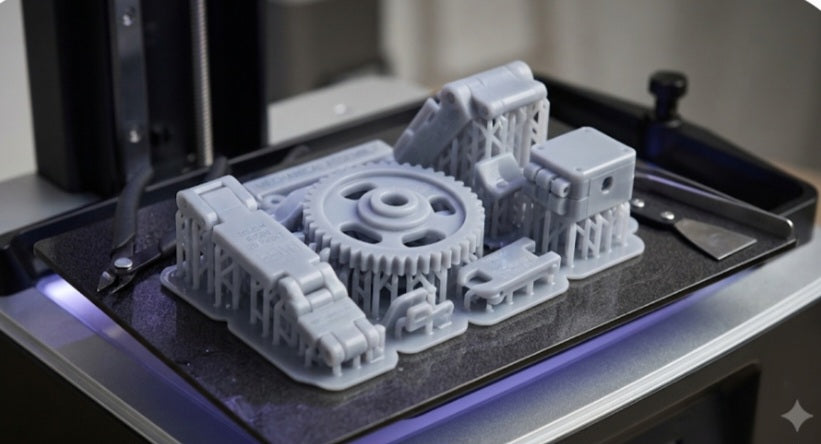
If you are tired of your 3D printed models shattering the moment they take a little tumble, it is time to look at tough resin.
While standard resins are fantastic for capturing microscopic details, they completely lack the mechanical durability needed for functional parts that face real-world wear and tear.
What is Tough Resin?
Tough resin is an advanced engineered photopolymer specifically formulated to simulate the robust mechanical properties and impact resistance of ABS or polycarbonate plastics.
Instead of snapping cleanly like glass under sudden stress, tough resin possesses a unique structural balance of high tensile strength and controlled, slight flexibility. This allows the material to absorb sudden kinetic shocks, bending slightly under pressure rather than suffering catastrophic failure.
Core Technical Properties
High Impact Resistance:
Engineered specifically to withstand heavy drops, accidental bumps, and cyclic loading without cracking or splintering.
Controlled Yield Strength:
Unlike brittle standard resins, it yields slightly under heavy physical loads instead of instantly fracturing.
Fatigue Resistance:
Excellent structural integrity for components that undergo repeated physical stress, friction, or movement over time.
Post-Processing Requirements:
Typically requires specific UV curing post-processing parameters to unlock its maximum mechanical strength and eliminate any lingering surface tackiness.
When Should You Use Tough Resin?
Tough resin is the definitive go-to material whenever your printed creation needs to survive the physical world rather than just sit safely on a display shelf. The most practical applications include:
Functional Prototypes:
Testing mechanical parts and physical concepts before committing to expensive final manufacturing runs, especially components meant to undergo physical stress.
Snap-Fit Assemblies & Enclosures:
Parts featuring delicate clips, interlocking joints, or tight housings that need to bend and lock into place without snapping off.
Working Mechanical Components:
Custom brackets, structural connectors, gears, and hinges that require both structural rigidity and high resilience against daily wear.
Jigs and Fixtures:
Manufacturing aids used in workshops or assembly lines that take a beating from daily handling and tool usage.
Practical Tips for Printing with Tough Resin
Working with tough resin requires a few adjustments compared to standard formulations:
Exposure Times:
Because of its chemical composition and pigmentation, tough resins often require slightly longer layer exposure times during printing to ensure proper layer adhesion.
Supports:
Due to its slightly rubbery and resilient nature, removing supports can sometimes require a sharp hobby knife or cutters rather than just snapping them off by hand. Ensure your support tips are robust enough to hold heavier models during printing.
Washing and Curing:
Follow manufacturer guidelines closely for isopropyl alcohol (IPA) wash times, and make sure the print is completely dry before post-curing under UV light to achieve optimal mechanical properties.
Ultimately, choosing tough resin comes down to balancing the demands of your specific application against material costs and post-processing needs.
While it requires a bit more attention during support removal and UV curing, the investment pays off exponentially when your final prints need to endure heavy handling, functional testing, and real-world friction without breaking a sweat.


