
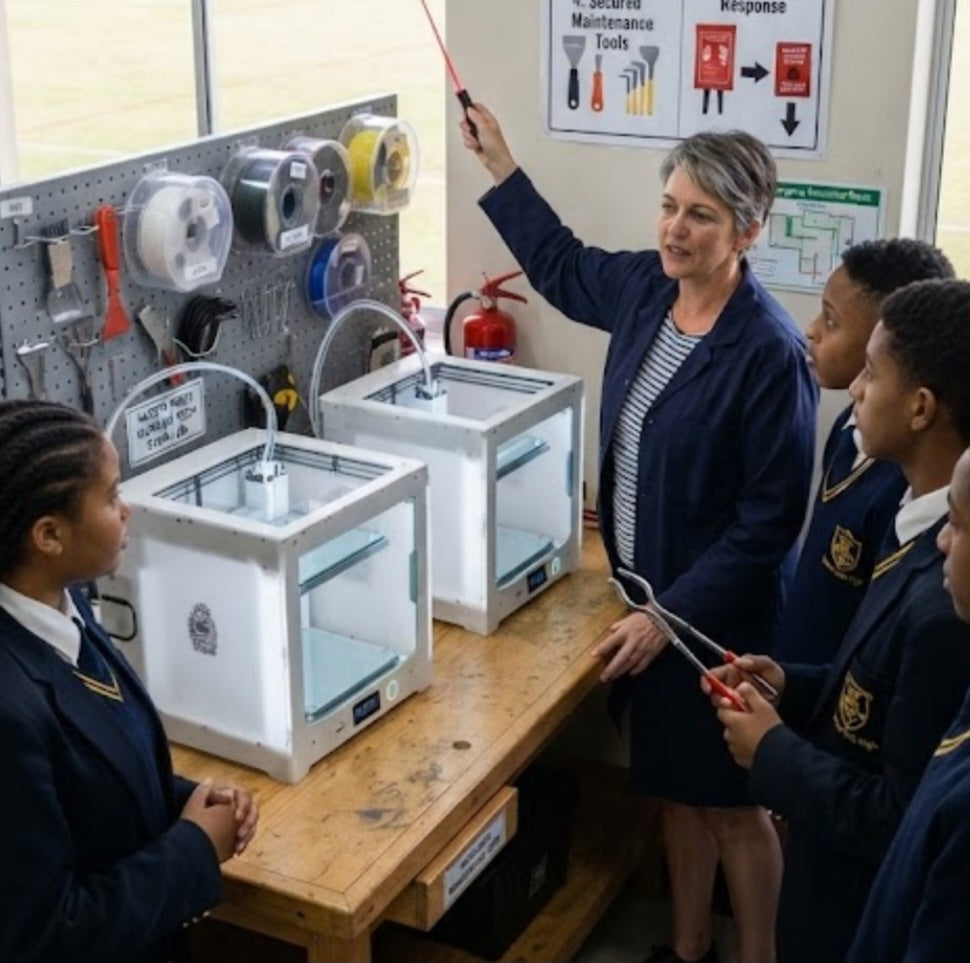
Integrating FDM 3D printing into a high school technology lab introduces students to industrial-grade manufacturing, but it also brings real-world physical hazards that require rigorous oversight. When managing up to thirty teenagers around equipment operating at high temperatures, relying on casual awareness is never enough. For South African educators balancing busy classrooms and strict institutional liability, establishing a foolproof safety protocol protects both the students and the school's capital investments. A comprehensive safety checklist ensures that every technical session runs smoothly without risking burns, electrical faults, or inhalation hazards.
Enforce Strict Thermal Safety Boundaries:
Clearly mark hotend zones and heated beds that exceed 200\text{°C}, ensuring learners use insulated tongs or wait for full cool-down cycles before handling prints.
Inspect Electrical Integrity and Power Backups:
Verify that printers are connected to reliable surge-protected strips and UPS units to manage local grid fluctuations safely without exposing frayed wires or overloaded circuits.
Maintain Adequate Ventilation for Polymer Fumes:
Position printers in well-aired maker spaces or utilize enclosures with carbon filtration, preventing the buildup of volatile organic compounds when melting specialized filaments.
Keep Dedicated Maintenance Tools Secured:
Store scrapers, flush cutters, and hex keys on a locked pegboard or tool station to prevent accidental misuse and ensure sharp blades are handled responsibly.
Beyond the immediate physical precautions, cultivating a culture of safety teaches teenagers the essential compliance habits required in professional engineering and manufacturing environments. When students see their instructor systematically checking thermal cutoffs, verifying enclosure doors, and clearing build plates with proper tools, they internalize the gravity of industrial operations. This disciplined approach eliminates careless mistakes, such as yanking hot print sheets or forcing jammed filaments without heating the nozzle first.
Furthermore, integrating a standardized safety checklist into your daily routine safeguards the school's equipment budget against preventable damage. By preemptively identifying loose wiring, worn nozzle tips, or blocked cooling fans, educators can address minor wear and tear before it escalates into a costly breakdown. A safe maker space is a productive maker space, giving learners the freedom to innovate while maintaining absolute control over the classroom environment.
Implementing a clear emergency response protocol is another vital layer of classroom management that every educator must establish before plugging in their equipment. In the rare event of a thermal runaway malfunction or a sudden electrical short, students need to know precisely where the master power cutoff switch is located and how to evacuate the immediate work area calmly. Training learners to recognize the signs of a burning smell or abnormal smoke ensures that minor component failures are addressed instantly rather than turning into hazardous fire risks.
Additionally, managing proper filament storage contributes directly to a safe and organized workspace by preventing tripping hazards and material degradation. Loose spools rolling across desks or tangled filament strands left on the floor can easily cause slips or pull delicate machinery off tables. Keeping spools securely racked in designated storage bins maintains clean, uncluttered walkways that keep thirty active students safe during busy workshop sessions.


