
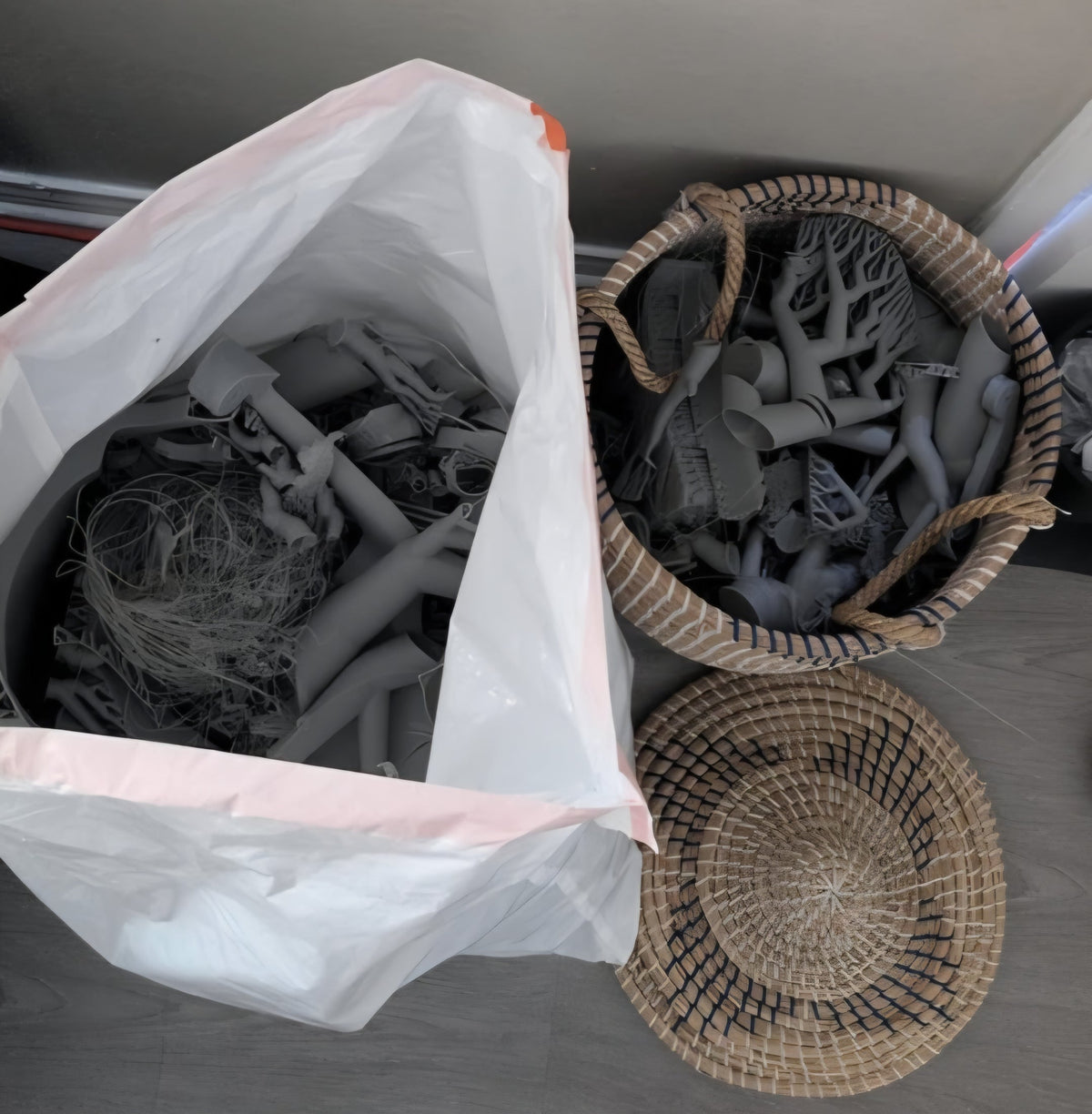
Excessive support structures and failed print attempts can quickly fill up your scrap bin, wasting valuable filament and driving up your material costs.
Optimizing your workflow to minimize unnecessary scaffolding is one of the most effective ways to print more sustainably and economically.
Strategic slicing adjustments and model preparation techniques will help you drastically cut down on plastic waste.
Reorient Your Model on the Build Plate
Before generating any supports, look closely at your part's orientation to see if you can eliminate overhangs entirely.
How It Works:
Tilting a model by 30 to 45 degrees or laying a flat edge directly against the build plate can transform a steep, dangling ledge into a gradual, self-supporting slope or bridge.
Why It Helps:
Smart part orientation avoids the need for vertical scaffolding altogether, saving both material and hours of post-processing cleanup.
Optimize Support Interface Settings
When supports are unavoidable, you can still control how aggressively they bond to your actual model.
How It Works:
Enable support interfaces (dense roof layers) and increase the z-distance gap between the top of your support and the bottom of your print.
Why It Helps:
A well-tuned gap allows supports to easily snap off by hand in a single clean sheet without leaving behind stubborn plastic residue or marring the surface finish.
Leverage Paint-on Supports
Instead of letting your slicer flood your entire model with scaffolding wherever an angle exceeds 45 degrees, take manual control.
How It Works:
Use your slicer's paint-on support feature to place support enforcers exclusively on critical, structurally vulnerable overhangs.
Why It Helps:
This targeted approach prevents the software from building unnecessary internal columns inside hollow cavities or decorative recessed areas where they are completely unneeded.
Adopting mindful part positioning and precise scaffolding controls transforms material efficiency, turning an otherwise wasteful fabrication process into a clean and streamlined operation.


