
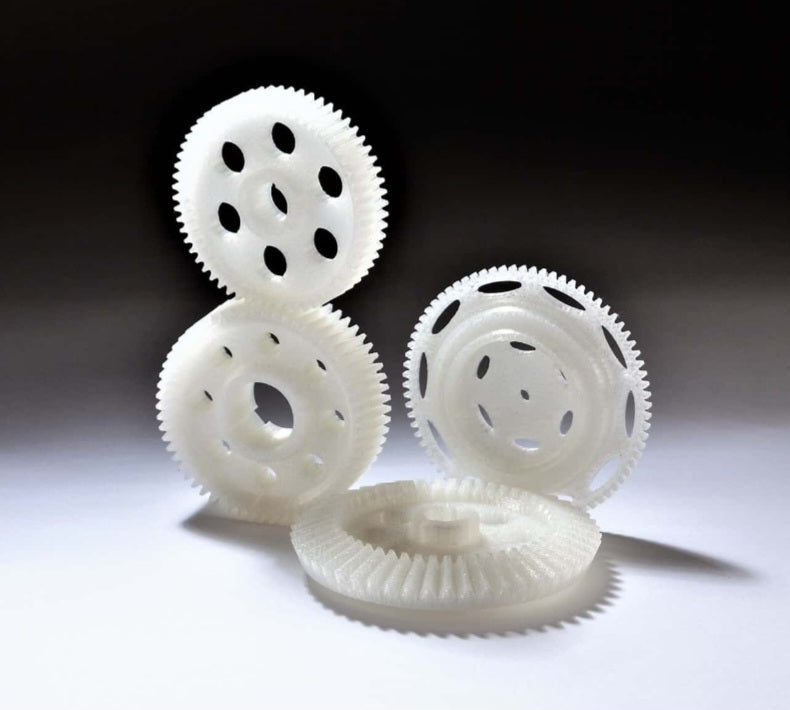
Nylon is one of the most capable, durable, and resilient engineering thermoplastics available for desktop 3D printing. Valued for its incredible strength, low friction coefficient, exceptional wear resistance, and slight flexibility, it is the go-to material for heavy-duty mechanical gears, functional hinges, snap-fit components, and rugged structural parts.
However, printing nylon is notoriously challenging. Before you load a spool into your machine, you need to prepare for its unique handling requirements.
Aggressive Moisture Management (Dry Storage)
The single biggest hurdle when working with nylon is its extreme hygroscopic nature.
The Problem:
Nylon acts like a sponge, rapidly absorbing ambient humidity straight from the air—sometimes within just a few hours. If you print with wet nylon, the trapped moisture instantly boils inside the hot nozzle, causing severe bubbling, popping sounds, excessive stringing, sputtering, and a dramatic drop in layer adhesion and overall part strength.
The Solution:
You must store nylon in a sealed dry box or container packed with an abundance of fresh silica gel. Even better, use an active filament dryer box that feeds the filament directly into your printer while keeping it heated and bone-dry throughout the entire multi-hour print job.
A Fully Enclosed, Heated-Capable Printer
Like ABS and ASA, nylon suffers from significant thermal contraction as it cools.
The Problem:
If printed in an open-air environment, internal stresses will cause the corners of your model to warp upward off the build plate and layers to split apart mid-print.
The Solution:
A fully enclosed 3D printer chamber is essential. An enclosure traps the ambient heat generated by the heated bed, slowing down the cooling rate and preventing the thermal shock caused by outside drafts.
High-Temperature Hardware (All-Metal Hotend)
Nylon is a high-performance polymer that demands serious thermal output.
The Requirement:
Most engineering grades of nylon require nozzle temperatures ranging from 240°C to 270°C (and sometimes higher depending on the specific blend). Standard printers equipped with PTFE-lined hotends cannot handle these sustained temperatures safely, as the PTFE tube will degrade and release toxic fumes.
You must use an all-metal hotend and a hardened steel nozzle, as nylon blends (especially carbon-fiber or glass-filled variants) are abrasive and will quickly chew through standard brass nozzles.
Specialized Build Plate Adhesion
Getting nylon to stick to a print bed can be notoriously difficult. It refuses to adhere to standard cold glass or plain PEI sheets.
The Solution:
Depending on your specific filament brand, nylon requires specialized adhesive surfaces. A heavy layer of specialized glue stick (often formulated specifically for nylon), PVA-based liquid adhesives, Garolite (G-10) sheets, or specialized high-temp PEI textured plates are typically required to anchor the first layer down securely.
Post-Processing and Machining Capabilities
Unlike brittle standard polymers, finished nylon parts offer unique post-processing advantages that make them exceptional for functional prototyping.
Because of its toughness and slight malleability, nylon accepts mechanical finishing exceptionally well. You can easily drill, tap threads into, ream, or sand printed nylon parts without worrying about the plastic cracking or shattering under the drill bit.
This makes it the ultimate choice for custom mechanical assemblies where components need to be bolted together, fitted with threaded brass inserts, or integrated into moving machinery alongside metal parts.


